

Buyer's Guide: Fuel Pressure Regulator
8 min read
RideBuilder
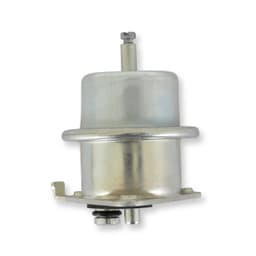
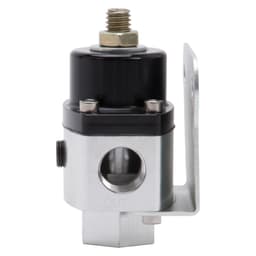
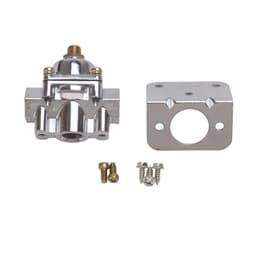
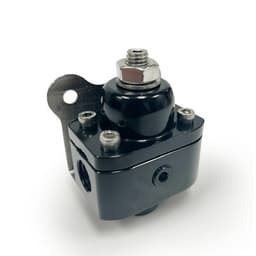
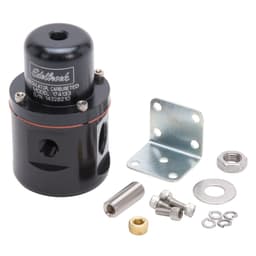
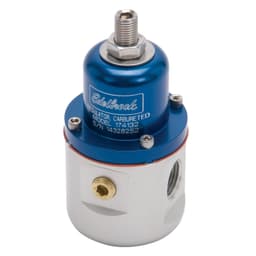
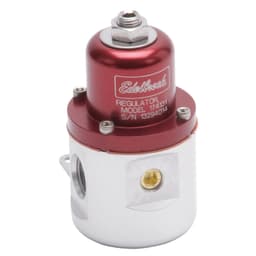
Fuel Pressure Regulator Buyer's Guide
A fuel pressure regulator is the gatekeeper of your fuel system. While your fuel pump generates flow and volume, the regulator controls pressure. The fuel pressure regulator ensures that the precise fuel pressure needed by your injectors or carburetor is maintained at all times. This guide covers how fuel pressure regulators work in EFI and carbureted systems, how to select the right type for your build, and how to set base fuel pressure once your regulator is installed.
Why Upgrade Your Fuel Pressure Regulator?
The factory fuel pressure regulator is adequate for stock applications, but several common modifications make an aftermarket unit necessary:
- Upgrading your fuel system: Higher-flow pumps and larger injectors require more precise pressure control than the stock regulator can provide. An aftermarket fuel pressure regulator allows you to fine-tune base fuel pressure which an essential step when calibrating your fuel system.
- Adding forced induction: Turbocharged and supercharged engines require fuel pressure to rise with boost pressure. Most stock regulators are not boost-referenced and cannot do this automatically.
- Switching to E85 or methanol: Stock regulators and their internal seals are often not rated for alcohol-based fuels.
- Replacing a failing stock unit: A worn, faulty regulator causes erratic fuel pressure, which can result in poor driveability.
How Fuel Pressure Regulators Work in EFI Systems
In a return-style EFI system, fuel flows from the pump through the fuel rail and into the regulator. The regulator uses a spring-and-diaphragm valve to control how much fuel is returned to the tank. When pressure rises above the setpoint, the valve opens further to relieve pressure. When it falls, the valve closes to allow pressure to build. This self-regulating system ensures stable base pressure reaches your injectors.

EFI regulators have two core responsibilities.
Maintain Base Fuel Pressure.
Base pressure is the static fuel pressure measured at idle with the vacuum reference line disconnected from the intake manifold. Port injected engines commonly run a base pressure of 43.5 PSI, though this varies by engine/application.
Maintain Injector Pressure Differential.
To inject the correct amount of fuel, a fuel injector relies on a consistent pressure differential between the fuel pressure and the intake manifold pressure. As load increases or boost builds, the intake manifold pressure rises, pushing back against the injector and reducing its effective fuel flow. To compensate for the increased manifold pressure, the fuel pressure regulator responds by increasing fuel system pressure. The regulator is connected to the intake manifold via a vacuum/boost reference line. It continuously monitors manifold pressure and adjusts fuel rail pressure accordingly, keeping the pressure differential across the injector constant.
- +10 PSI boost → fuel pressure increases by 10 psi
- -10 PSI vacuum → fuel pressure decreases by 10 psi
No matter the intake manifold pressure, the pressure differential remains the same, ensuring an accurate amount of fuel is injected every time. This ensures the ECU can accurately control fuel delivery at all engine loads, from idle vacuum to full boost.
Fuel Pressure Regulators in Carbureted Systems
Fuel pressure regulators in carbureted systems operate at much lower pressures, typically 3-8 psi, and are not interchangeable with EFI regulators. They come in two configurations: return style and deadhead (returnless). The choice between them has meaningful performance implications.
Return Style
A return-style system operates as a continuous loop. The pump pushes fuel to the regulator, and any unused fuel is routed back to the tank through a dedicated return line. This constant circulation keeps fuel cooler, reduces the risk of vapor lock, and allows the fuel pump to run at a lower load, extending its service life.

Return-style regulators have one inlet, one outlet, and one return port. The regulator is typically placed after the carburetor, though placement before the carburetor is also acceptable. Return style configurations are the preferred choice for any performance carbureted build.
Deadhead (Returnless) Style
In a deadhead system, the fuel pump delivers fuel to the regulator, which acts as a "dead-end" stop. Once the desired fuel pressure is reached, the regulator's internal valve closes, blocking flow entirely. This setup simplifies plumbing, as only a single fuel line is needed from the tank, but it comes with trade-offs. Fuel sits stationary near the engine, making it prone to heat soak and vapor lock. The pump also works harder, constantly pushing against a closed valve, which increases operating temperature and shortens pump life.

Deadhead regulators have one inlet and one or two outlet ports, with no return port. The regulator must always be placed before the carburetor in a deadhead system. This configuration is best suited to stock or lightly modified street vehicles where simplicity is the priority.
A Note on Mechanical Fuel Pumps
Most factory mechanical fuel pumps (common on older carbureted engines) do not strictly require an external regulator. However, adding one is still recommended for consistent performance to ensure proper fuel pressure always reaches your carburetor.
How to Choose the Right Fuel Pressure Regulator
Step 1: Match Your System Type
The most important decision is return style vs. deadhead. This is not a preference; it must match the system you have or are building. A return-style regulator cannot be used in a deadhead system, and vice versa. If you are building a new system, return style is strongly recommended for any performance application.
Step 2: Match the Pressure Range
Fuel pressure regulators are rated based on their pressure range. You must select a fuel pressure regulator that is rated for your intended base fuel pressure. In general,
- EFI: Typically requires a range of 30-60 PSI.
- Carbureted: Typically requires 3-8 PSI.
Step 3: Verify Fuel Compatibility
If you are running E85, methanol, or any alcohol-based fuel, confirm that the regulator is rated for your fuel type. Standard rubber seals degrade with alcohol fuels, so look for regulators explicitly marked E85-compatible.
Step 4: Match Fitting Sizes
Match the regulator's inlet, outlet, and return port sizes to your fuel lines. Common sizes are AN-6 and AN-8. Using a fitting smaller than your fuel lines creates a flow restriction that undermines the regulator's precision and can limit your system's maximum horsepower capacity. It is best to keep the AN size consistent throughout the system.
Setting Base Fuel Pressure
Once your regulator is installed, you will need to set base fuel pressure. You will need a fuel pressure gauge to do this. See our Fuel Pressure Gauge Buyer's Guide for help selecting one. Follow these steps:
- Disconnect the vacuum/boost reference line from the intake manifold and plug the manifold port.
- Turn the ignition key to the ON position to prime the fuel pump without starting the engine.
- Read the fuel pressure from your gauge. This is your current base pressure.
- To adjust: loosen the locknut on top of the regulator, then use an Allen key to turn the adjustment screw. Typically, clockwise increases pressure; counterclockwise decreases it.
- Once the target base pressure is reached, tighten the locknut to secure the setting.
- Reconnect the vacuum/boost reference line and start the engine. Verify that pressure rises and falls correctly with manifold pressure.
Conclusion
A fuel pressure regulator is essential for maintaining precise and consistent fuel delivery, especially in modified or high-performance applications. By maintaining stable base pressure and dynamically compensating for manifold pressure changes, it allows your engine, whether carbureted or fuel-injected, to receive exactly the right amount of fuel at all times. When building or upgrading your fuel system, match your regulator type to your system, your pressure range to your application, and your fitting sizes to your fuel lines. You can find all the parts you need and plan your build on RideBuilder.