

Buyer's Guide: Fuel Injectors
10 min read
RideBuilder
Fuel Injectors Buyer's Guide
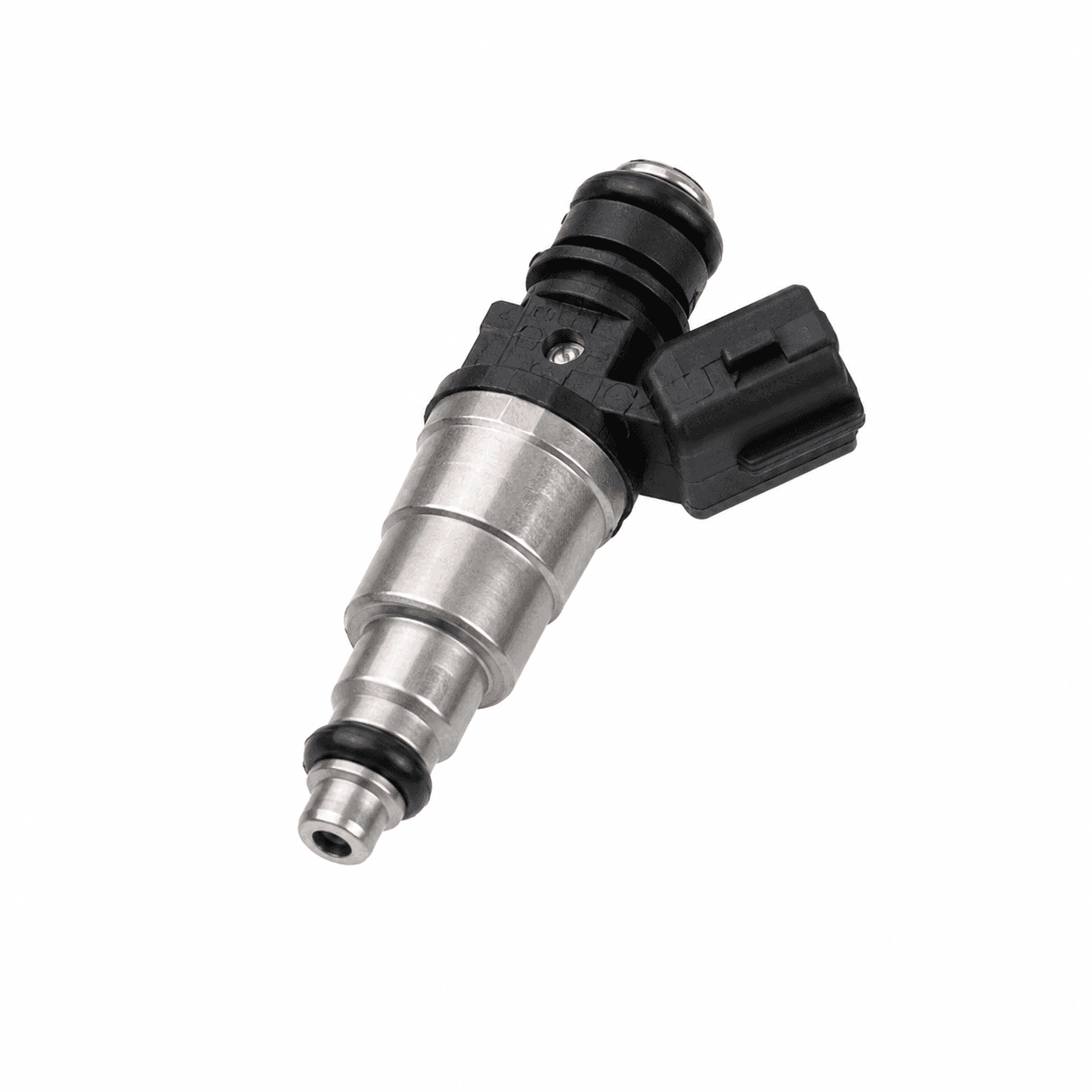
Fuel injectors are electronically controlled valves that open and close dozens of times per second to spray precisely metered amounts of fuel into the engine. While older vehicles relied on carburetors to mix fuel and air, modern fuel injection system offer superior cold-start performance, consistent throttle response, and significantly better power and fuel efficiency. The ECU governs the entire process, using data from various engine sensors to calculate exactly how much fuel each cylinder needs at any given moment and signaling the injectors accordingly. Stock fuel injectors are sized to support factory power levels with a modest safety margin. When engine output increases, such as through forced induction or other modifications, the stock injectors can reach the limits of their flow capacity. When your engine demands more fuel than your injectors are capable of delivering, it is time to upgrade the size of your fuel injectors. This guide walks you through when you should upgrade your fuel injectors, how they work, and how to calculate the appropriate sized injector for your application.
When Should I Upgrade My Fuel Injectors?
Stock fuel injectors are sized to support factory power levels with a small safety margin. Once engine output increases significantly, the injectors may no longer be able to deliver sufficient fuel volume, causing the engine to run lean. This leads to reduced power, increased heat, and potentially serious engine damage. You should consider upgrading your fuel injectors if you are making any of the following changes:
- Forced Induction Upgrades: Adding a turbocharger or supercharger significantly increases the volume of air entering the engine. To maintain a safe air-fuel ratio, fuel delivery must increase proportionally.
- Fuel Type Conversions: Ethanol-based fuels such as E85 require approximately 30-40% more fuel flow compared to an equivalent gasoline setup to reach their ideal stoichiometric air-fuel ratio. Upgrading your injectors is a mandatory step in any ethanol fuel conversion.
- High RPM or High Load Operation: Injectors may reach their maximum duty cycle in high RPM or high load applications such as racing or towing. If your injectors cannot keep up with the fuel demands at these conditions without exceeding their maximum duty cycle, an upgrade is necessary.
Symptoms of Undersized Injectors
- Lean air-fuel ratios under high RPM or high load conditions.
- Power loss or hesitation at the top of the rev range.
- Engine knock under full throttle
- Injector duty cycle at or above 85% in ECU data logs.
How Fuel Injectors Work
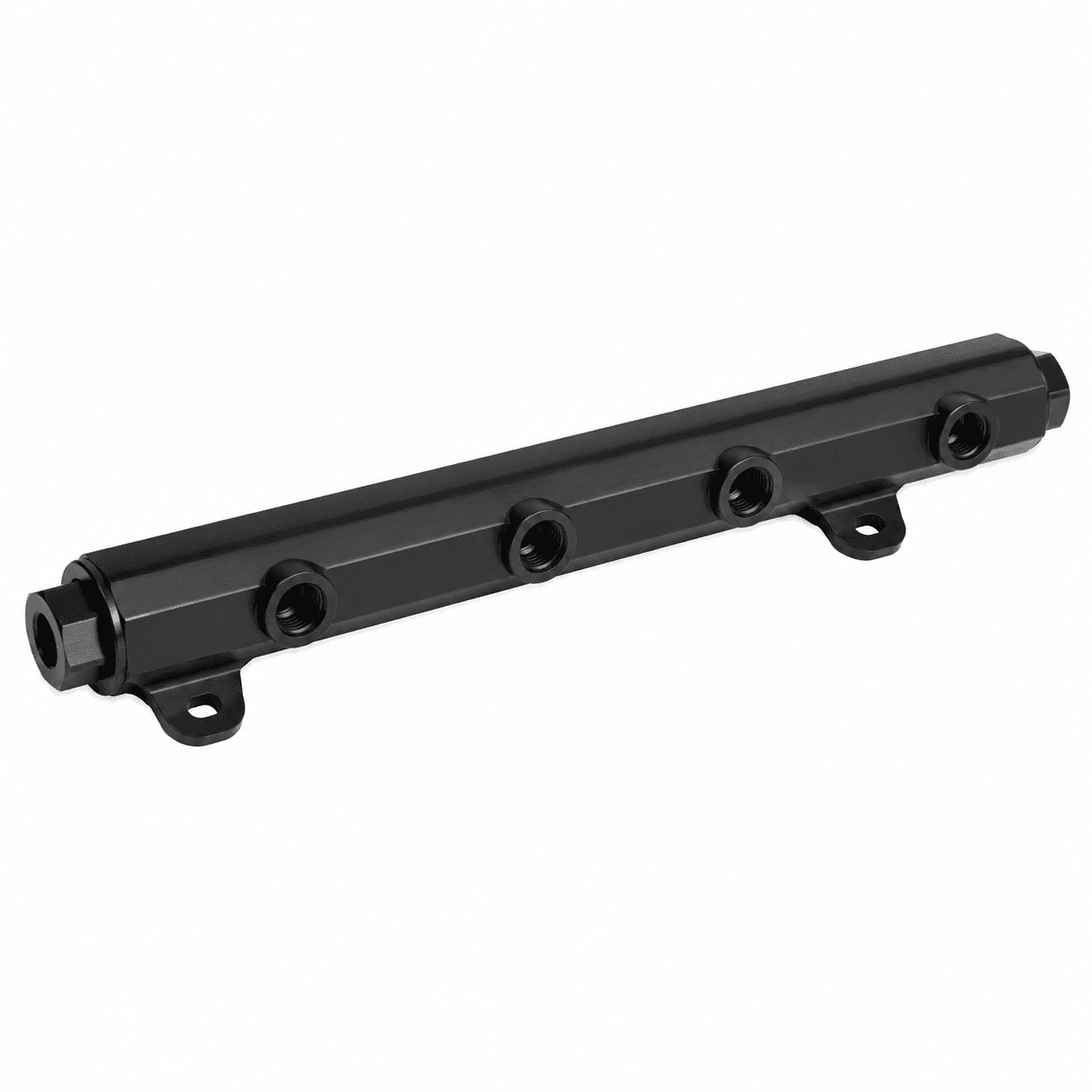
Fuel injectors are electronically controlled valves that deliver fuel into the engine as a fine, atomized mist to promote efficient combustion. Fuel is supplied to the injectors via the fuel rail, which is pressurized by the fuel pump. When fuel arrives at the fuel injector, the following four steps occur:
- Activation: The Engine Control Unit (ECU) sends an electrical signal to the injector's internal electromagnet, aka solenoid.
- Delivery: This opens a spring-loaded valve, allowing pressurized fuel to spray through the pintle or nozzle.
- Atomization: The fuel is released in a fine, atomized mist to maximize surface area, ensuring a thorough mix with incoming air for efficient combustion.
- Frequency: This process occurs multiple times per second, working in perfect concert with the spark plugs to power the vehicle. This entire process is controlled by the ECU based on various inputs from the throttle position sensor, mass airflow sensor, oxygen sensors, and other engine sensors.
Fuel Injection System Types
While there are several ways to move fuel into an engine, the type of fuel injection system present on your vehicle is dictated by your engine's specific architecture.
- Port Fuel Injection (PFI): The most common system architecture in the performance aftermarket. Injectors are mounted in the intake manifold, one per cylinder, and spray fuel into the air stream just upstream of the intake valve. Because the injectors are not exposed to combustion pressures, they operate at relatively modest fuel pressures (typically 43 to 58 psi) and are straightforward to upgrade. The fuel spray washes over the back of the intake valve with every cycle, which keeps the valves clean and free of carbon deposits. Port injection is the standard upgrade path for the majority of naturally aspirated and forced induction performance builds due to its relative simplicity, wide parts availability, and well-understood tuning characteristics.
- Direct Injection (GDI): In direct injection systems, the injector is located inside the combustion chamber itself and sprays fuel at extremely high pressures, typically between 1500 to 3000 psi or higher. Direct injection systems are typically more powerful and more efficient compared to port injection systems. The trade-off is that they are more prone to carbon build on the intake valves since fuel does not wash over them, subsequently increase maintenance requirements. GDI is increasingly common on modern vehicles to meet emissions standards.
- Dual Injection: Some modern engines combine both port injection and direct injection into one system to get the best of both worlds. This type of fuel injection system is becoming more and more common in modern gasoline vehicles due to its superiority.
- Indirect Injection: Specific to diesel engines, indirect injection delivers fuel into a small pre-chamber rather than directly into the main combustion chamber.
Injector Duty Cycle
Injector duty cycle refers to the percentage of time an injector is open during engine operation. For example, a 50% duty cycle means the injector is open half the time. Most injectors should not exceed 80–85% duty cycle at wide open throttle. Beyond this threshold, injector performance becomes non-linear and fuel delivery becomes less predictable. For this reason, injectors should be sized with headroom to avoid operating at their limits. High quality injectors can be rated to operate at higher duty cycles, however a maximum of 80% duty cycle is a safe and practical limit. An injector operating at 70% duty cycle at maximum power has capacity for further power increases or tuning. An injector already at 85% has none.
How to Calculate Fuel Injector Size
Use the calculator below to calculate the minimum fuel injector size to achieve your target crank horsepower. Round up from this value when purchasing fuel injectors. It is recommend to give your injectors some headroom, especially if you are planning for more upgrades. Power is always lost when being transferred from the crank to the wheels. To convert wheel horsepower to crank horsepower, account for drivetrain power loss using the following estimates:
- Front-wheel drive (FWD): approximately 10% loss
- Rear-wheel drive (RWD): approximately 15% loss
- All-wheel drive (AWD): approximately 20% loss
Formula: Crank HP = Wheel HP ÷ (1 − drivetrain loss %)
Example: A RWD vehicle targeting 400 wheel HP.
- Crank HP = 400 ÷ (1 − 0.15) = 470 crank HP
Fuel Injector Sizing Calculator
Engine Parameters
Induction Type
Injector Flow Rate
Size = (Crank HP × BSFC) / (# Injectors × Duty Cycle) · 1 lb/hr = 10.5 cc/min
BSFC stands for Brake Specifics Fuel Consumption which means how much fuel your engine consumes per hour for each horsepower generated. BSFC depends on your engine, fuel, and tune but can be reasonably approximated based on your induction type and fuel.
Compatibility and Fitment
Selecting the correct injector size is only part of the purchasing decision. Several other factors determine whether a given injector will integrate correctly into your vehicle's fuel system and engine management.
Connection Type → Electrical Compatibility
The connector determines whether your vehicle's wiring harness can plug into your new injector. Common connector types include EV1, EV6 (USCAR), EV14, and Denso, among others. Adapter pigtails are widely available and allow mismatched connectors to be used without rewiring, though matching connectors natively simplifies installation and avoids wiring headaches.
Impedance → ECU Compatibility
Your new injector's impedance must match your ECU's control strategy.
- High impedance Injectors (10–16Ω) are the standard for the vast majority of street and performance applications. They are compatible with most factory and aftermarket ECUs without additional circuitry and should be the default choice for nearly all buyers.
- Low Impedance Injectors (2–5Ω) offer faster solenoid response times and are used in high-performance and racing applications where precise fuel delivery at very high RPM is critical. Low impedance injectors require an ECU with a peak-and-hold driver circuit to control them correctly. Using low impedance injectors with an ECU not designed for them will damage both the injectors and the ECU.
O-Ring Size and Fitment → Mechanical Compatibility
Injectors seal to the fuel rail at the top and to the intake manifold at the bottom using O-rings. The two most common O-ring diameters are 11mm and 14mm. Both ends must match your application to ensure a proper seal and prevent fuel leaks. Always lubricate O-rings during installation to prevent tearing during assembly.
Injector Height → Fitment & Installation
Injector height is measured between the centerline of the upper O-ring and the centerline of the lower O-ring. If replacement injectors differ in height from the stock units, the fuel rail mounting position changes accordingly. For taller injectors, verify that the fuel rail mounting bolts have sufficient thread engagement into the intake manifold. For shorter injectors, spacers or adapters may be required to maintain correct fuel rail positioning and sealing.
ECU Tuning
After upgrading your fuel injectors, you must tell your ECU about the new injectors flow rates, or else the engine will run incorrectly. This can be accomplished either through a performance tune or using an aftermarket ECU.
Legal/Emissions Compliance
Modifying the fuel system can impact emissions compliance and inspections. Legality varies by region - always check local rules.
Conclusion
Fuel injectors play a critical role in delivering precise and consistent fuel to your engine, directly impacting performance, efficiency, and reliability. When upgrading, start by accurately estimating your fuel requirements, then select injectors with sufficient flow capacity and proper headroom. From there, confirm compatibility with your vehicle's electrical system and fuel hardware. When properly sized and tuned, upgraded injectors ensure your engine receives the fuel it needs to safely support increased power and operate at its full potential. You can find all the parts you need and plan your build on RideBuilder.