Buyer's Guide: Intake Manifolds
6 min readRideBuilder
Intake Manifold Buyer's Guide
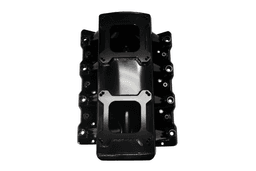
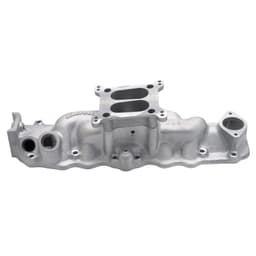
The intake manifold is the final stage of your intake system. It bolts directly to the cylinder head and distributes incoming air evenly across all cylinders. Stock intake manifolds are designed around cost and packaging rather than flow efficiency, making aftermarket upgrades a popular choice for enthusiasts looking to improve power and throttle response. This guide covers how intake manifolds work, what affects their performance, and what to look for when upgrading.
Why Upgrade Your Intake Manifold
An aftermarket intake manifold is not typically the first upgrade you should make to your intake system. Most OEM manifolds are already well-engineered, and the gains from an aftermarket unit on a stock or mildly modified engine are often modest. A cold air intake, exhaust system, and tune will generally deliver more performance per dollar.
Where aftermarket intake manifolds make the most sense:
-
High power forced induction builds where the factory manifold becomes a genuine flow bottleneck
-
Engines with a known restrictive OEM manifold
When justified, an aftermarket manifold can deliver meaningful gains in power and throttle response by optimizing airflow and delivering extra power at specific RPM ranges.
How Intake Manifolds Work
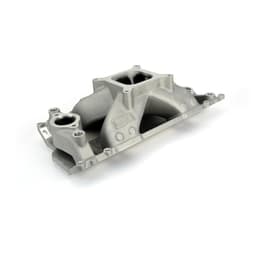
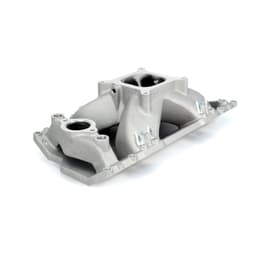
For air to enter the engine, it must pass through the air filter, intake piping, and throttle body before reaching the intake manifold. The manifold's job is to distribute this air evenly across all cylinders. It consists of two main sections:
-
The Plenum: The central chamber that receives air from the throttle body and acts as a reservoir. It helps ensure the runners receive a consistent supply of air.
-
The Runners: Individual tubes that branch from the plenum to each cylinder's intake port. Runner length and diameter are the primary variables that determine where in the RPM range the manifold makes most power.
Runner Design
The diameter and length of intake runners have a meaningful impact on power delivery, making their design worth noting for enthusiasts looking to optimize the performance of their vehicle.
Runner length:
-
Longer runners are optimized for low-to-mid RPM performance. They allow higher intake air velocities, ultimately improving low-end torque. However, at high RPM, longer runners add an airflow restriction.
-
Shorter runners reduce this restriction, making them the preferred choice for peak power and high RPM performance. The trade-off is reduced intake velocity and torque at low RPM.
Runner diameter:
-
Larger diameter runners support higher airflow, increasing peak power. However, the larger diameter decreases air velocity, reducing throttle response and low-end torque.
-
Smaller diameter runners optimize for low-end performance. They increase air velocity, improving throttle response and low-end torque at the cost of top-end flow capacity.
The right intake runner design depends on whether you spend most of your time at the low-to-mid RPM range (longer, smaller diameter runners), or whether you're chasing peak power (shorter, larger diameter runners).
Helmholtz Resonance
Runner length also affects Helmholtz resonance, which plays a smaller role in where your engine makes power.
When an intake valve closes, a pressure wave is sent back up the runner towards the plenum. If the runner length is tuned such that the pressure wave reflects back and arrives at the intake valve just as it reopens, it stuffs additional air into the cylinder at that RPM.
The runner length determines the narrow RPM range where this resonance effect occurs. Shorter runners produce resonance at high RPM, while longer runners produce resonance at low RPM. Importantly, the effect cuts both ways. For every horsepower you gain in one RPM range through Helmholtz resonance, you lose in a different RPM range.
Variable intake manifolds exploit this phenomenon by changing runner length based on engine speed, allowing you to gain performance across a broader RPM range.
Plenum Volume
Plenum volume affects the balance between throttle response and peak power.
-
Larger plenums act as a bigger air reservoir, supporting high-RPM power by reducing pressure drop when multiple cylinders demand air simultaneously. The trade-off is slower throttle response because the larger volume takes longer to pressurize when the throttle plate opens.
-
Smaller plenums pressurize more quickly, improving throttle response and low-RPM torque. The trade-off is reduced top-end flow capacity.
For street builds, a moderate plenum volume is the right balance between peak power and throttle response. For performance builds that require higher airflow, a larger plenum is the right choice.
Throttle Body Compatibility
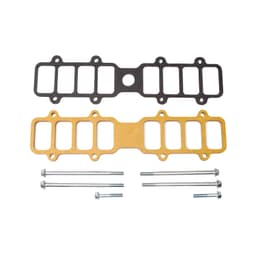
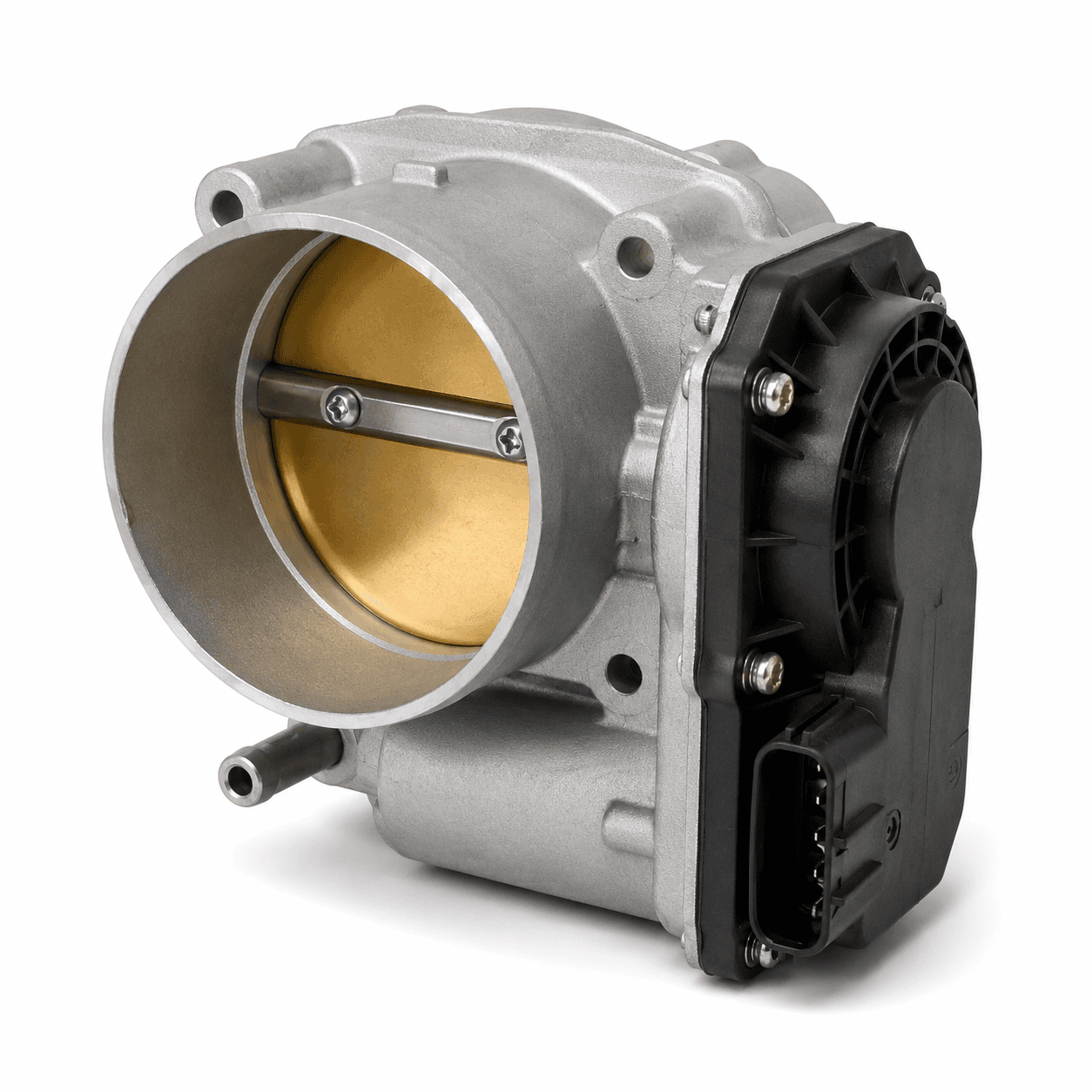
The throttle body bolts directly to the intake manifold and controls the amount of air entering your engine. When upgrading your intake manifold, confirm that your existing throttle body is compatible with the new manifold's inlet size/bolt pattern. If there is a mismatch, throttle body adapter plates are available, or budget for a throttle body upgrade alongside the manifold. Read more in our Throttle Body Buyer's Guide.
Compatibility
Intake manifolds are engine specific. Always confirm that the intake manifold you are purchasing fits the engine within your vehicle. Additionally, aftermarket intake manifolds are often physically larger than the factory unit, which can create clearance issues in tight engine bays. Examine your engine bay carefully before purchasing, particularly if your build includes other aftermarket components.
Conclusion
The intake manifold delivers air to your engine and plays a meaningful role in where power is made across the RPM range. For most builds, it becomes a worthwhile upgrade after foundational modifications such as an intake, exhaust, and tune. When you do upgrade, match your runner geometry and plenum volume to your intended RPM range, confirm throttle body compatibility, and verify fitment in your engine bay before purchasing. You can find all the parts you need and plan your build on RideBuilder.