Buyer's Guide: Throttle Bodies
6 min readRideBuilder
Throttle Body Buyer's Guide
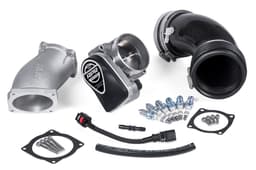
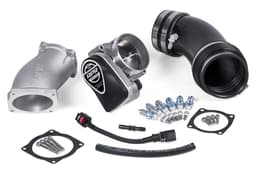
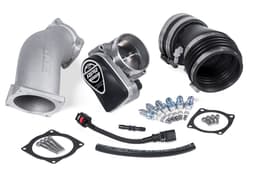
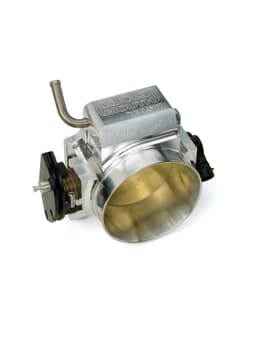
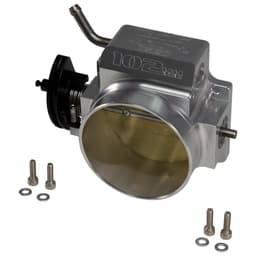
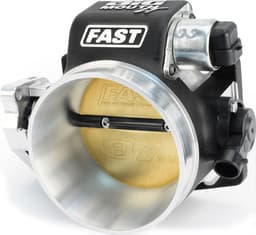
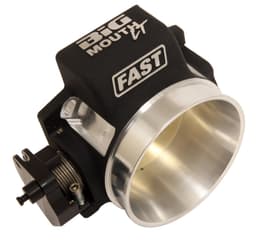
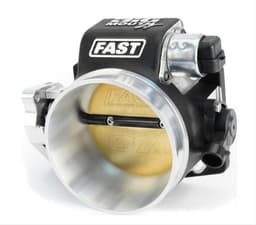
A throttle body controls the amount of air entering your engine. It mounts to your intake manifold and connects to the intake tubing. As you press the accelerator, the throttle body opens wider to let more air into the engine. Throttle bodies are defined by the diameter of the throttle bore. Performance builds commonly use larger throttle bores to allow for more airflow and to generate more power. This guide walks you through how throttle bodies work, the types of throttle bodies, and how to choose the right one for your build.
How Throttle Bodies Work
The accelerator pedal controls the position of the throttle plate, also called the butterfly valve. At idle, the throttle plate is closed, preventing air from entering the engine. At wide-open throttle (WOT), the throttle plate is parallel to the airflow and out of the way.
On older vehicles, idle air control valves were used to manage airflow at idle by bypassing a small amount of air around the closed throttle plate. Modern systems manage idle by slightly opening the throttle plate itself.
Mounted to the exterior of the throttle body is the throttle position sensor that tells the ECU the exact angle of the throttle plate at all times. This helps inform proper fuel delivery, spark timing, and more. Read more about throttle position sensors here.
Drive-by-Cable
Older vehicles use a cable that physically connects the accelerator pedal to the throttle plate. Drive-by-cable vehicles provide immediate throttle feedback and what some enthusiasts describe as a more connected driving experience. Due to the downsides of cable maintenance and lack of integration with modern electronic systems, drive-by-cable has been phased out of modern production vehicles since the mid-2000s.
Drive-by-Wire
Modern vehicles use electronic throttle control, first introduced by BMW in 1988. Instead of using a physical cable, a sensor measures pedal position and sends this information to the ECU. The ECU then controls a small electric motor in the throttle body that opens the throttle plate to the appropriate angle.
This system allows for more dynamic control over throttle position, allowing for modern technologies such as cruise control, throttle response curves, rev limiters, and more. Electronic throttle bodies also offer smoother acceleration and improved fuel efficiency.
Throttle Bore Size
All airflow entering your engine flows through the throttle body. If your throttle body is not large enough to support your engine's airflow demands, you may be choking your engine's performance, particularly at high RPMs.
You can diagnose an airflow restriction by monitoring your MAP sensor's pressure reading (if you have one). If your engine starts seeing vacuum (or otherwise reduced pressure) at high RPMs, you likely have an airflow restriction.
Before upgrading your throttle body, it is best to confirm that the airflow restriction does not come from elsewhere in your intake system. This prevents the mistake of increasing the size of your throttle body when the restriction really was your air filter or intake piping.
When increasing the size of your throttle body, identify the diameter of your current throttle body's bore and choose one slightly larger. This ensures you don't oversize your throttle body which can reduce air velocity and harm low-end performance.
Individual Throttle Bodies (ITBs)
Most production engines use a single throttle body mounted at the entrance to the intake manifold. Air enters through the throttle body and gets distributed to all cylinders through the manifold runners.
Individual throttle bodies (ITBs) give each cylinder its own throttle plate, mounted directly on each intake runner. All throttle plates open and close together using a mechanical linkage. ITBs commonly have trumpets attached called velocity stacks that help improve airflow. ITBs benefit from instant throttle response because there's almost no volume between the throttle plate and the combustion chamber. They also look and sound great.
The downside of ITBs are their cost, complexity, and potential fitment issues due to their size. ITBs are notoriously difficult to tune; they either calculate fuel delivery based on throttle position and RPM alone, or they use vacuum lines on each intake runner that connect to a vacuum box and a MAP sensor. ITBs are not commonly used on supercharged or turbocharged engines due to added complexity and tuning difficulties.
Throttle Body Maintenance & Cleaning
Throttle bodies can accumulate oil residue and carbon build up over time on the throttle plate and the bore walls. Eventually, this affects performance causing rough idle, hesitation, and a throttle that feels sticky or unresponsive. To clean your throttle body, first remove it from your engine bay. Then spray throttle body cleaner, wipe with a clean rag, and use a soft brush as necessary to get into hard to reach spaces. Avoid manually rotating the throttle plate on drive-by-wire throttle bodies as this can cause damage.
Conclusion
Throttle bodies control how much air enters your engine. If you are significantly upgrading the power of your engine, consider increasing the size of your throttle body to avoid choking your engine with an airflow restriction. Match the bore size to your horsepower goals and confirm mounting compatibility to ensure smooth installation and operation. You can find all the parts you need and plan your build on RideBuilder.