
Buyer's Guide: Coilovers
8 min read
RideBuilder
Coilover Buyer's Guide
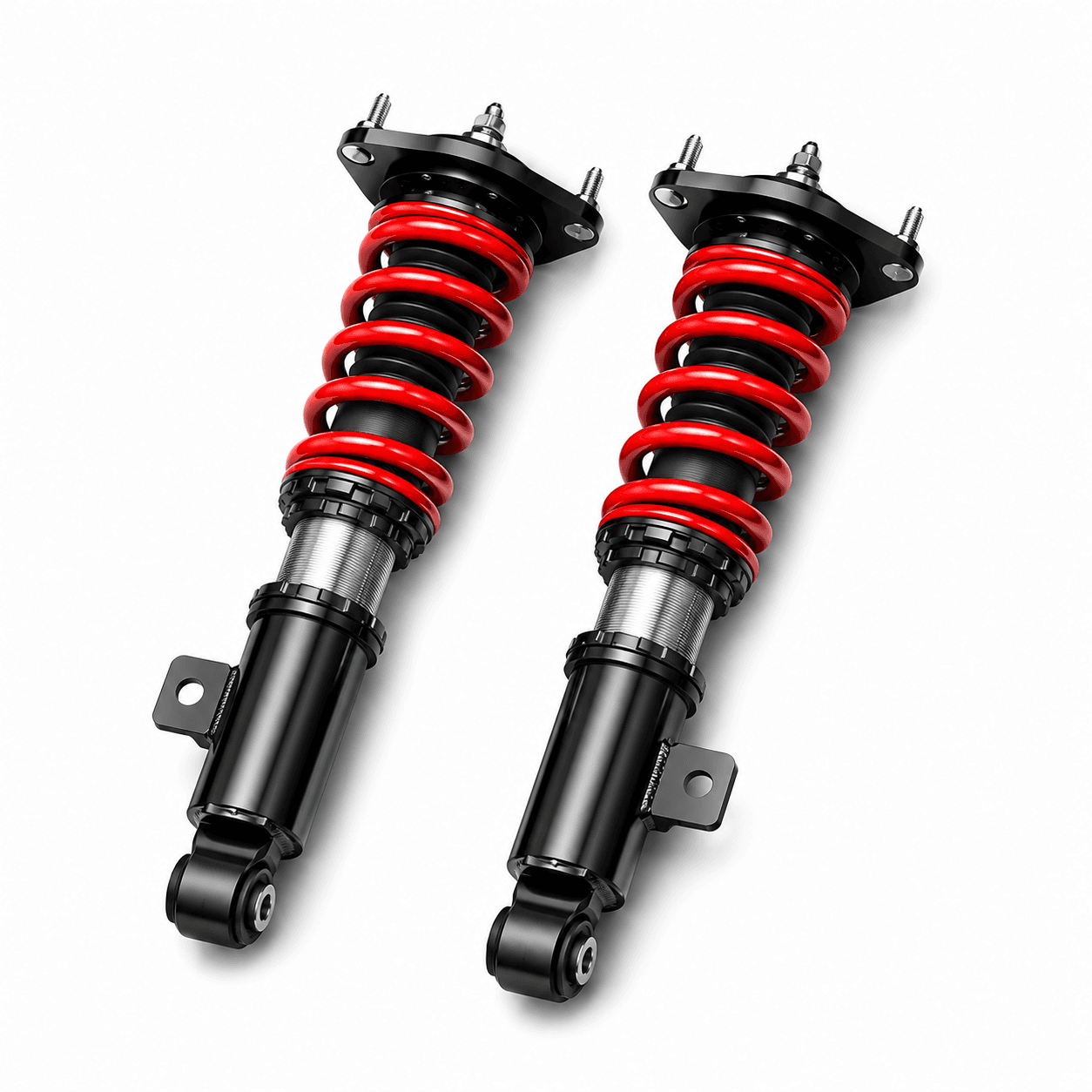
Coilovers are one of the most effective ways to transform how your vehicle looks and drives. Coilovers are suspension components that combine the spring and damper into a single integrated, adjustable unit, replacing the factory strut entirely. Enthusiasts love coilovers for their ability to independently adjust ride height, damping, and transform their vehicle's handling. Whether your goal is improved daily drivability, more aggressive styling, or maximum on-track performance, selecting the right coilover system starts with understanding your priorities and learning how these systems function. This guide covers everything you need to know to navigate the options and choose the coilover system that best fits your vehicle and goals.
Why Upgrade Your Coilovers?
-
Handling Improvements: The proper coilover spring rate and damping setup helps ensure the tires stay in contact with the road, maximizing friction and improving handling. Whether you want to feel more connected to the road or you're chasing lap times, coilovers can help transform your vehicle's handling.
-
Ride Height Adjustment: Coilovers allow you to lower your vehicle to achieve your desired stance, lower your center of gravity, and eliminate wheel gaps. Unlike fixed lowering springs, coilovers let you adjust ride height infinitely within the system's range so you can dial it in exactly how you want it.
-
Customization and Fine-Tuning: Select your desired spring rate, ride height, and damping for your vehicle's application to better control body roll, dive, and squat. If your application changes, simply adjust your ride height or damping as you see fit.
Determine Your Use Case
Before selecting a coilover system, the most important question to ask is: what do you want your car to do? Your answer determines which features and specifications matter most. Most builds fall into one of three categories:
-
Daily Driver: Prioritize ride quality. A well-balanced setup will improve handling without sacrificing comfort due to excessively stiff springs.
-
Show Car: Focus on aesthetics and adjustability. Ride height range and features like camber adjustment become more important than outright performance.
-
Track / Performance Car: Prioritize handling, precision, and durability. Look for systems with adjustable damping (ideally two-way or better) that let you fine-tune for different track conditions. Performance-focused setups are stiffer and less comfortable on the street but excel on the circuit.
Many builds fall somewhere in between, so it's important to identify where your priorities lie before making a decision.
Define Your Budget
Coilovers span a wide range of price points, and performance generally scales with cost. Establishing a budget early helps narrow your options and ensures you focus on systems that meet your needs without overspending or compromising on critical features.
What Is a Coilover?
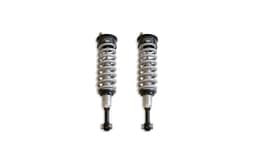
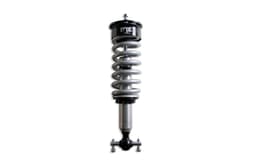
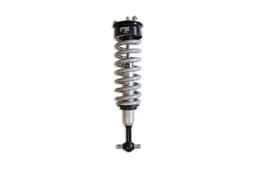
A coilover combines a coil spring and a shock absorber (damper) into a single integrated unit. On vehicles with factory struts, the coilover replaces the entire assembly. On vehicles with separate springs and shocks, the coilover replaces both with a single adjustable unit.
Most performance coilovers feature a threaded damper body that allows you to adjust the position of the lower spring seat. This lets you change ride height independently of the damper's stroke length.

How do Coilovers Work?
Coilovers operate by managing energy through two primary components:
Spring (Energy Storage): When your wheel encounters a bump, the spring compresses to absorb the impact and then rebounds to return the wheel to its original position.
Damper (Energy Dissipation): The damper dissipates the spring's energy. Without a damper, the spring would continue to oscillate indefinitely. Inside the damper, a piston moves through hydraulic oil with interval valves. The resistance created by restricting fluid flow converts the kinetic energy into heat and brings the suspension back to rest in a controlled manner.

The damper also controls the rate at which the spring compresses and rebounds. Depending on the coilover, you may be able to adjust:
-
Compression damping (how quickly the suspension compresses)
-
Rebound damping (how quickly it returns)
This allows you to fine-tune the suspension's response to different driving conditions.
Coilovers vs. Lowering Springs
If you only want to lower your car, springs are a cheaper option, but coilovers provide significant advantages:
| Feature | Lowering Springs | Coilovers |
|---|---|---|
| Ride Height | Fixed drop | Adjustable |
| Damping | Non-adjustable | Typically Adjustable |
| Damper Life | Can shorten factory strut life | Engineered as a matched pair |
| Cost | Cheaper | More expensive |
Adjustability Tiers
The complexity of the adjustment is often what separates entry-level coilovers from professional-grade kits.
Ride Height Adjustment
-
Perch-Based: The spring perch moves up or down on the damper body. Simple but affects spring preload (and therefore spring stiffness).
-
Shock Body Adjustment: The entire damper body threads into the lower mount, allowing ride height adjustments without affecting spring preload or losing suspension travel. This is superior and found on higher-quality coilovers.
Damping Adjustment
-
Single-Way: One knob adjusts both compression and rebound damping simultaneously. Perfect for most street enthusiasts.
-
Two-Way: Separate knobs for compression damping (hitting a bump) and rebound damping (recovering from a bump). Allows for independent fine tuning. Recommended for performance and track driving.
-
Three/Four-Way: Separates low-speed (body roll) and high-speed (hitting a curb) damping. These are typically reserved for professional racing applications.
Spring Rate
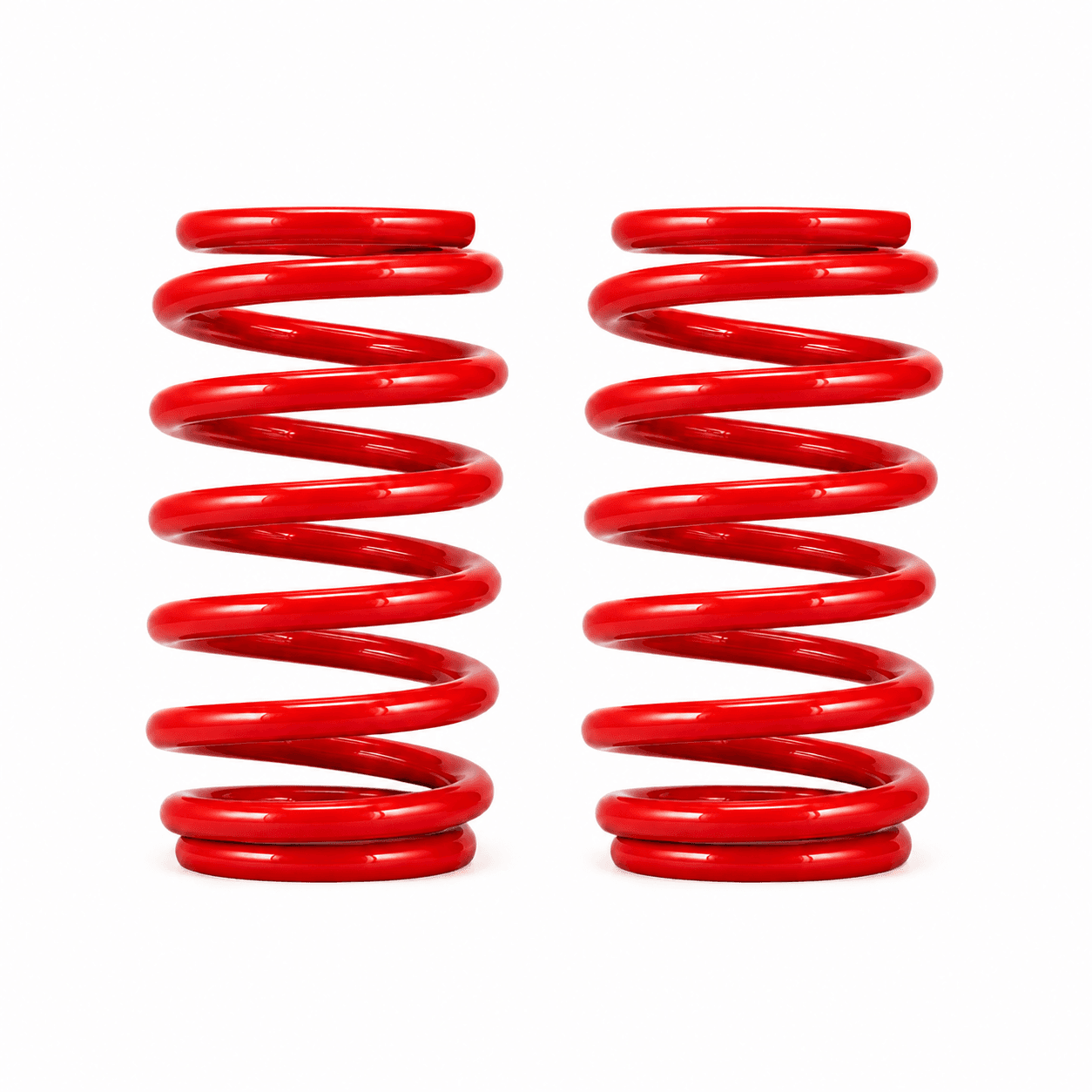
Spring rate determines how stiff the suspension is. A stiffer spring (higher spring rate) reduces body roll and provides more responsive handling, but transmits more bumps to the cabin and creates a harsher ride. A softer spring (lower spring rate) provides a smoother, more comfortable ride but allows more body roll during cornering and braking. You should match your coilover spring rate to your priorities - stiff enough for handling but soft enough for comfort.
Spring Types
-
Linear Springs: Consistent stiffness throughout the entire stroke.
-
Progressive Springs: Become stiffer the more they are compressed. Progressive springs offer a "best of both worlds" for street cars by allowing for more comfortable daily driving while adding more support in performance application.
-
Dual-rate springs: These springs feature two distinct stiffness zones. They offer a good balance between handling and compliance over larger bumps.

Damper Design: Mono-Tube vs. Twin-Tube
-
Twin-Tube Dampers: Twin-tube dampers are the standard on OEM and budget coilovers. They're simple and cost effective, but suffer from "fade" in performance application. Twin-tube designs are limited by their heat dissipation and can cavitate under repeated compression cycles, which reduces damping efficiency.
-
Mono-Tube Dampers: Mono-tube dampers offer superior performance, heat dissipation, and resistance to cavitation. Mono-tube shocks use a floating piston that separates a pressurized nitrogen gas chamber from the oil chamber, as seen in the damper diagram earlier in this guide. Mono-tube dampers are the gold standard for performance driving and track use.
Conclusion
Coilovers are one of the most impactful suspension upgrades, offering control over both aesthetics and performance. Start by defining your use case and budget. Understanding how coilovers function - specifically the relationship between spring rates, damping, and adjustability - allows you to make an informed decision that balances comfort, performance, and aesthetics. For daily drivers, mid-range range coilovers with progressive springs are a great choice. For performance applications, consider investing in two-way adjustable damping and a mono-tube setup. When properly selected and installed, a quality coilover transforms both how your car looks and drives, providing the control and flexibility needed to elevate your driving experience.