
Buyer's Guide: Brake Fluid
6 min readRideBuilder


Brake Fluid Buyer's Guide
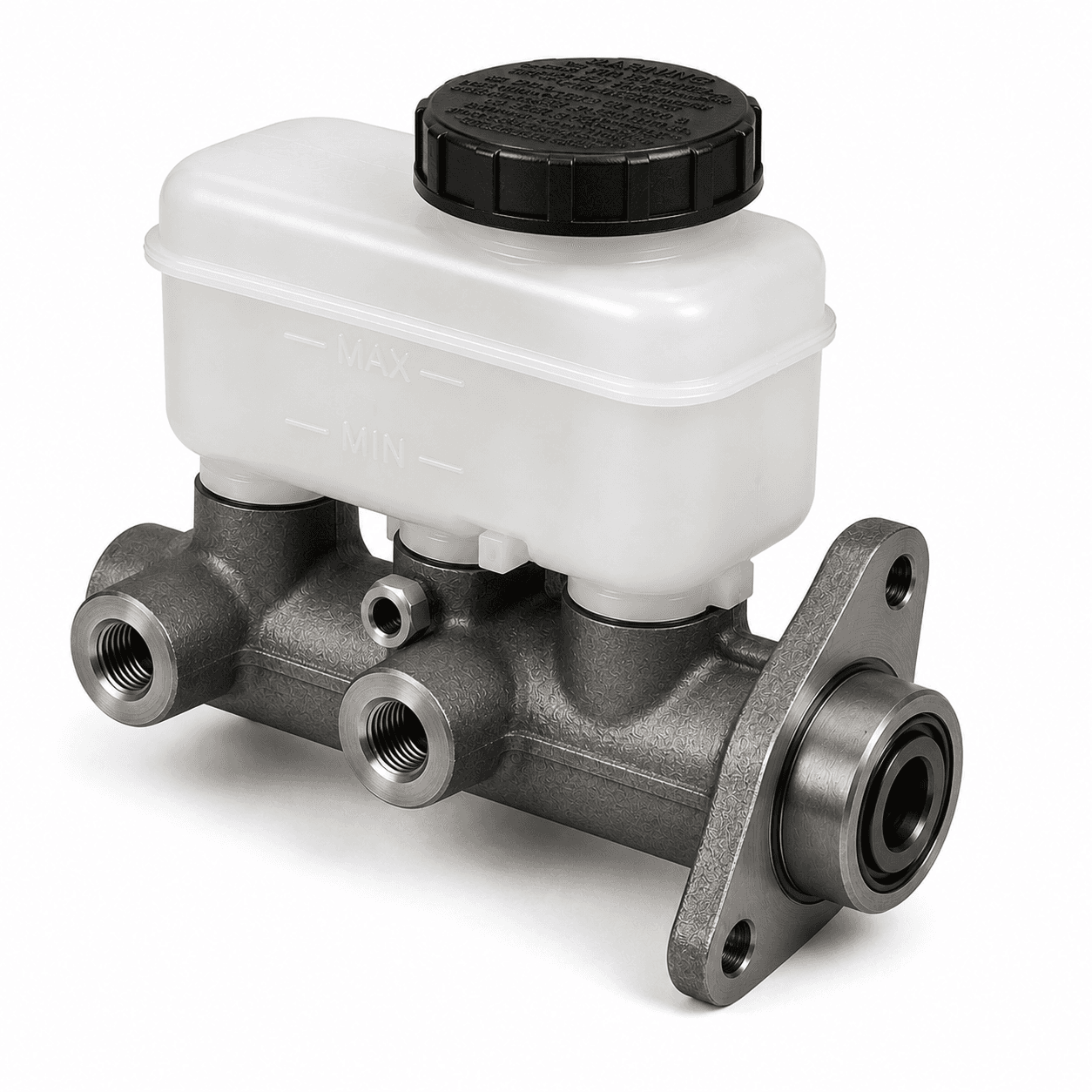
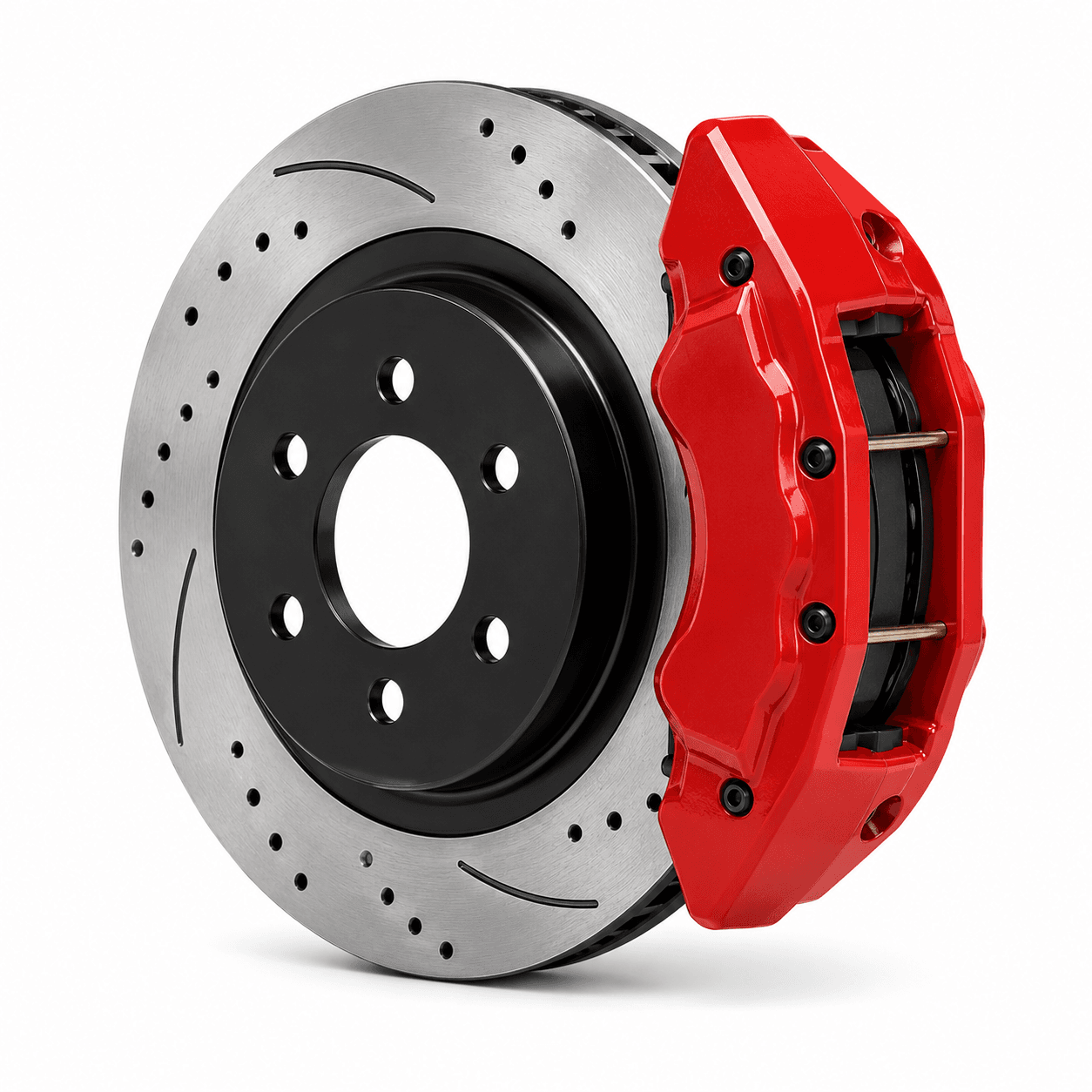
Brake fluid is the hydraulic medium that transfers force through your braking system. When you press the brake pedal, the master cylinder pressurizes the brake fluid which travels through your brake lines and actuates the calipers (or wheel cylinders), creating a stopping force at the wheels. This guide covers the key differences between brake fluid types and performance ratings so you can confidently choose the right fluid for your vehicle and application.
Why Brake Fluid Matters
Hydraulic systems such as the braking system in your vehicle require an incompressible fluid to transmit pressure properly. Whether air or boiled brake fluid, if you push the pedal when gas is present in your brake lines, you end up compressing the gas within your lines rather than pushing hydraulic fluid to actuate your brakes. This leads to what is described as a "spongy" pedal. More aggressive driving applications naturally produce more heat, requiring a higher grade brake fluid that will resist boiling at high temperatures. This makes your choice of brake fluid a critical decision, especially if you enjoy spirited driving.
Additionally, brake fluid absorbs water over time, reducing its performance. Replacing your brake fluid on a regular schedule is critical to ensure consistent braking performance.
DOT Grades Explained
The DOT grading system provides a standardized way for consumers to evaluate brake fluid performance. Each grade specifies minimum requirements for boiling point and viscosity. However, the most important distinction is the base chemistry.
DOT 3 / DOT 4 / DOT 5.1 = Glycol ether based. These three grades use glycol ether as their primary component and are fully compatible with one another within a system. The higher the number, the greater the brake fluid's boiling point and therefore performance. They are hygroscopic, meaning they absorb moisture from the atmosphere over time, which gradually lowers their boiling point. For this reason, glycol-based fluids should be replaced every two to three years under normal use, and more frequently in high-performance applications. Check your owner's manual for the interval specific to your vehicle.
DOT 5 = Silicone-based. DOT 5 is silicone-based and must never be used in systems specifying glycol-based fluid. It's designed for niche applications like military and extreme cold, and is incompatible with ABS braking systems. IMPORTANT: Do NOT put DOT 5 (silicone-based fluid) into a system that specifies DOT 3 / 4 / 5.1 or else you risk brake failure.
DOT Grade Specifications
| Grade | Base Chemistry | Dry Boiling Point* | Wet Boiling Point** | Best For |
|---|---|---|---|---|
| DOT 3 | Glycol ether | 205°C (401°F) | 140°C (284°F) | Stock street |
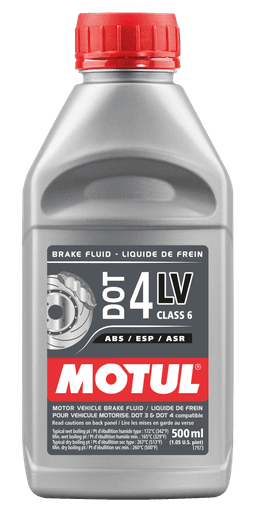
| DOT 4 | Glycol ether + borate ester | 230°C (446°F) | 155°C (311°F) | Performance street |
| DOT 5 | Silicone | 260°C (500°F) | 180°C (356°F) | DOT 5 systems only |
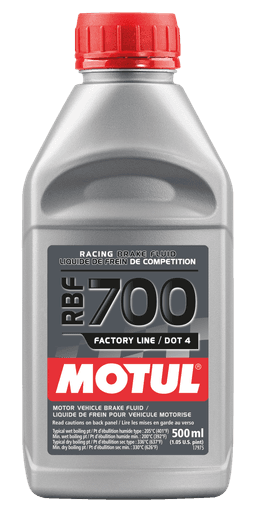
| DOT 5.1 | Glycol ether + borate ester | 260°C (500°F) | 180°C (356°F) | High-performance track use |
* Dry boiling point: fresh, uncontaminated fluid
** Wet boiling point: fluid after absorbing moisture, defined as 3.7% water by volume.
Key Specifications
Boiling Point
The boiling point is the most important brake fluid specification. Braking generates significant heat, and if the fluid reaches its boiling temperature, it can form vapor bubbles inside the brake lines and reduce braking performance. For street driving, DOT 3 or DOT 4 is typically sufficient. For track use or any application involving repeated hard braking, DOT 4 or DOT 5.1 is strongly recommended. Check your owner's manual for more information about the minimum grade brake fluid specified for your vehicle.
Viscosity
Viscosity is the fluid's resistance to flow. Lower viscosity fluids flow more freely, which is important in vehicles equipped with ABS, traction control, or stability control systems due to the rapid opening and closing of valves within the ABS module. In practice, viscosity rarely drives the purchasing decision for most buyers, but it is worth noting if you are selecting fluid for a vehicle with an advanced braking system.
How to Choose a Brake Fluid
-
Check your owner's manual for the specified DOT grade. This is your baseline. Never choose a lower grade brake fluid than specified.
-
If your vehicle specifies DOT 5, you must use DOT 5. It is not interchangeable with any glycol-based fluid.
-
For all other applications, you can use a fluid that meets or exceeds your specified grade. DOT 4 is a safe upgrade over DOT 3, and DOT 5.1 is a safe upgrade over DOT 4. Do not substitute DOT 5 as an "upgrade" for glycol-based systems.
-
Match the grade to your application. Higher performance applications will require high grade brake fluids. Street driving: DOT 3 or DOT 4. Spirited driving or occasional track use: DOT 4. Dedicated track: DOT 5.1.
-
Choose a reputable brand. Most brake fluids from established manufacturers within the same grade are largely equivalent so you can ignore any fancy marketing.
Conclusion
Choosing the right grade brake fluid is essential to ensure proper functioning of your braking system. Match your fluid to your vehicle's specification, don't mix glycol-based and silicone-based fluids, and replace it on schedule. For performance driving, upgrading to DOT 4 or DOT 5.1 is one of the simplest and least expensive improvements you can make to your braking system. Follow the simple steps above to make sure you're choosing the right brake fluid for your vehicle and application. You can find all the parts you need and plan your build on RideBuilder.