Lowering Spring Buyer's Guide
Lowering springs are one of the most popular and accessible suspension modifications for car enthusiasts. They are designed to reduce ride height, improve handling, and provide a more aggressive stance.
For many drivers, lowering springs offer a cost-effective way to enhance both the look and performance of a vehicle without committing to a full coilover system. Whether you're a first-time modifier or an experienced enthusiast, selecting the right lowering springs comes down to choosing an appropriate drop height and spring rate for your application. This guide breaks down everything you need to know so you can pick confidently and get the stance and feel you're after.
What is a Lowering Spring?
A lowering spring directly replaces your vehicle's factory coil spring, allowing your car to sit closer to the ground than the stock ride height. Lowering springs achieve this by being physically shorter than the OEM spring, and in most cases, stiffer as well. The result is:
-
Lower Center of Gravity: Improves stability during high-speed maneuvers.
-
Reduced Body Roll: Stiffer rates prevent the car from leaning as much in corners.
-
Sportier Profile: Closes the wheel gap for a more aggressive, planted look.
Lowering springs are often considered a middle ground between stock suspension and a full coilover system. They are designed to work with your existing dampers (shocks or struts), making installation relatively straightforward without requiring a complete suspension overhaul.
Trade-offs to Consider
Lowering springs are one of the cheapest ways to meaningfully transform your car's look and feel, but they're also easy to get wrong if you don't choose carefully.
| Pros | Cons |
|---|---|
| Cost-Effective: Significantly cheaper than coilovers. | Fixed Height: Ride height cannot be adjusted after installation. |
| Ease of Installation: Typically uses factory mounting points and hardware. | Shock Wear: Can accelerate wear on factory dampers by forcing them to work in a shorter range. |
| Improved Handling: Firmer spring rates reduce dive, squat, and body roll. | Geometry Changes: Depending on drop height, additional components such as camber bolts or adjustable control arms may be required to achieve proper alignment. |
| Aesthetic Stance: Eliminates wheel gap quickly and affordably. | Ride Quality: Generally firmer than stock, which can feel harsh if paired with worn shocks. |
Lowering your vehicle also affects suspension geometry, which can impact alignment, tire wear, and handling characteristics. Mild drops are typically manageable with a standard alignment, but more aggressive setups may require adjustable suspension components to maintain proper geometry.
Choosing a Drop Height
Drop height refers to how much lower your vehicle will sit compared to stock, typically measured in inches or millimeters. Most manufacturers specify separate front and rear drop values, as each end of the car is tuned independently.
A practical way to visualize the effect of a lowering spring is to measure your vehicle's wheel gap — the space between the top of the tire and the fender. The drop height will reduce this gap by roughly the stated amount.
| Drop Range | Effect |
|---|---|
| Mild (~0.5"-1.0") | Cleaner look with minimal impact on comfort or geometry. |
| Moderate (~1.0"-1.5") | Noticeable stance improvement and handling gains. |
| Aggressive (1.5"+) | Maximum visual impact; high risk of trade-offs. |
More aggressive drops increase the likelihood of rubbing or clearance issues, place more strain on suspension geometry, and are almost always paired with stiffer spring rates — further affecting ride comfort. Going aggressive requires more planning and potentially more supporting mods to do it right.
Spring Rate
Spring rate determines how stiff the suspension is. A stiffer spring (higher spring rate) reduces body roll and provides more responsive handling, but transmits more bumps to the cabin and creates a harsher ride. A softer spring (lower spring rate) provides a smoother, more comfortable ride but allows more body roll during cornering and braking. Match your spring rate to your priorities and how the car will be used.
Spring Types
-
Linear Springs: Consistent stiffness throughout the entire stroke.
-
Progressive Springs: Become stiffer the more they are compressed. Progressive springs offer a "best of both worlds" for street cars by allowing for more comfortable daily driving while adding more support in performance application.
-
Dual-rate springs: These springs feature two distinct stiffness zones. They offer a good balance between handling and compliance over larger bumps.

Conclusion
Lowering springs are one of the best value-to-performance modifications available, delivering a noticeable improvement in handling and a more aggressive stance at a fraction of the cost of a full suspension build.
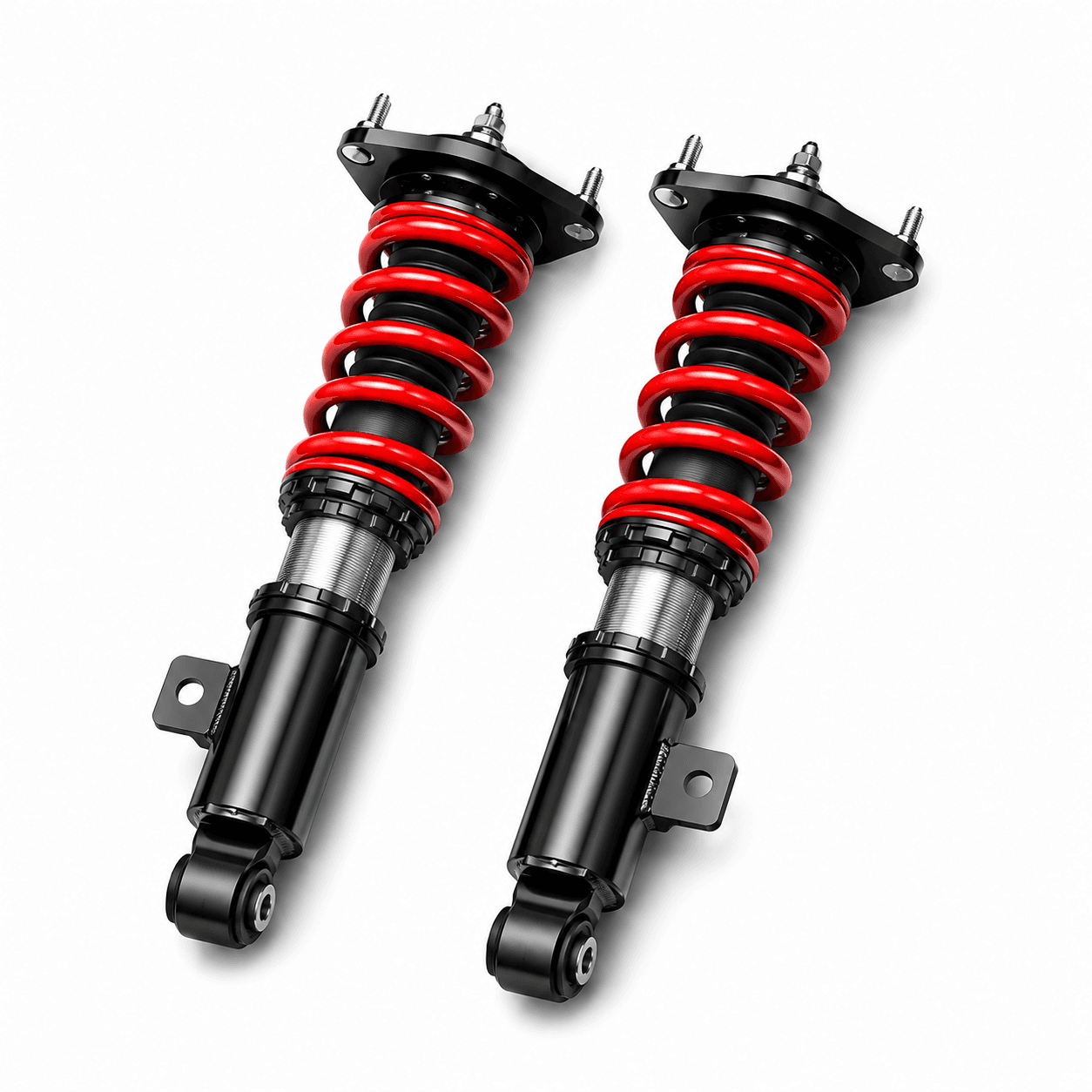
Choosing the right set comes down to your priorities and intended application. For daily drivers prioritizing comfort, a mild to moderate drop height and progressive spring is a great starting point. If sharper handling or a specific stance is the goal, a more aggressive drop and higher spring rate may be appropriate. Just plan for the supporting suspension work that often comes with it. For drivers who want independent control over ride height and damping, a coilover system is worth the investment.
Whatever route you choose, the right springs will transform how your vehicle looks, feels, and responds. You can find all the parts you need and plan your build on RideBuilder.