Intake Piping Buyer's Guide
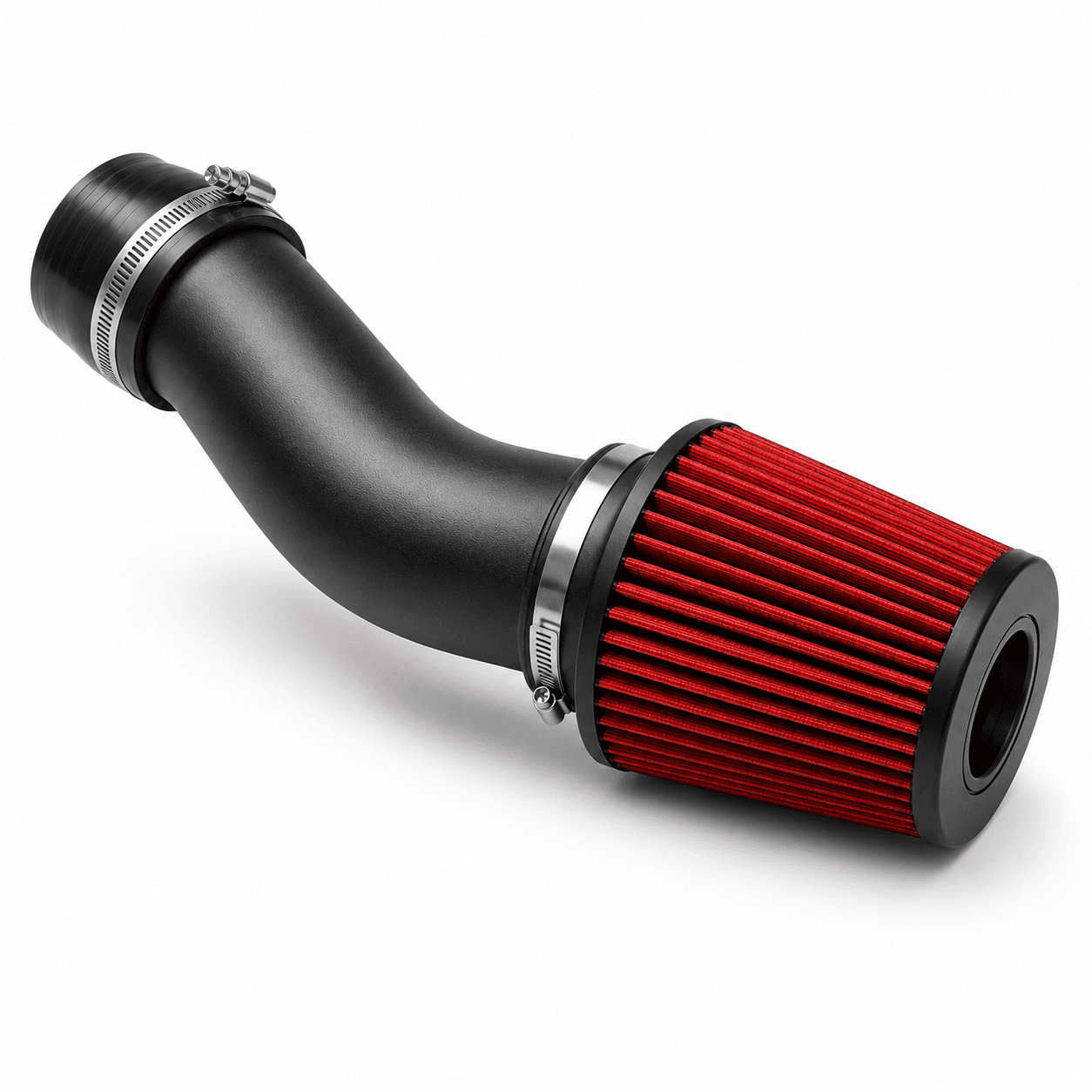
Intake piping connects your air filter to your throttle body, routing air through the engine bay to the engine. Stock intake piping can be restrictive or not have the flow capacity to support your horsepower goals. Aftermarket intake pipes prioritize smooth, unrestricted airflow with customizable diameters matched to your power goals. While often overlooked, the right aftermarket intake piping will help support your performance goals. This guide covers what you need to know to choose the right intake piping for your build.
How Intake Piping Affects Performance
The goal of intake piping is to deliver the maximum volume of air to the throttle body as smoothly and directly as possible. Several characteristics of the piping affect how well it accomplishes this:
-
Diameter: Larger diameter piping supports higher airflow volume, reducing restriction at high RPM. However, oversizing the piping reduces air velocity which can hurt throttle response and low-end torque. Match piping diameter to your throttle body inlet and power level. Going slightly larger than stock is appropriate for most performance builds, but significantly oversizing is counterproductive.
-
Bends and Routing: Every bend in the intake path creates turbulence and increases restriction. Smoother, more gradual bends maintain airflow better than sharp angles. When routing custom piping, minimize the number of bends and maximize their bend radius wherever possible.
-
Length: Shorter piping reduces the total intake path length, which can improve throttle response. However, too short and your air filter will be drawing in warm air from hot engine bay components.
Materials
Plastic, aluminum, silicone, and carbon fiber are the most common intake piping materials.
-
Plastic: Factory intake piping and many aftermarket pipes are molded plastic. It is durable, cost-effective, and provides excellent thermal insulation.
-
Aluminum: Lightweight, durable, and available in a wide range of diameters and bend angles. Aluminum is a great choice for custom routing and builds that want a specific aesthetic under the hood.
-
Silicone: Flexible couplers and some intake pipes are made from silicone. The silicone helps accommodate slight misalignments and absorb vibrations, reducing intake noise. High quality silicone is heat-resistant and durable to survive the temperatures present in the engine bay.
-
Carbon Fiber: Extremely lightweight and provides excellent thermal insulation. Comes at a premium cost compared to the alternatives.
Couplers and Clamps
Intake piping sections are connected using silicone couplers secured with clamps. A poorly sealed connection will allow unmetered air to enter the intake system, causing the ECU to miscalculate fuel delivery and the engine to run lean.
Clamp options include worm-gear clamps or T-bolt clamps. While both are appropriate, T-bolt clamps provide more uniform clamping, making them more suited for performance applications.
MAF Sensor Placement
On vehicles equipped with a mass airflow (MAF) sensor, the sensor must be positioned correctly within the intake piping. The MAF sensor measures the volume and density of air entering the engine. The ECU uses this reading to calculate fuel delivery.
Most aftermarket intake pipes will include a MAF sensor bung in an appropriate location. If you are building custom piping, position the MAF sensor away from any bend of diameter change to get the most accurate reading.
Conclusion
For most builds, a complete intake kit or vehicle-specific intake piping is the simplest path to a well-optimized system. If you are building a custom setup, keep in mind pipe diameter, smooth bends, routing away from heat sources, and MAF sensor placement. You can find all the parts you need and plan your build on RideBuilder.