Downpipe Buyer's Guide
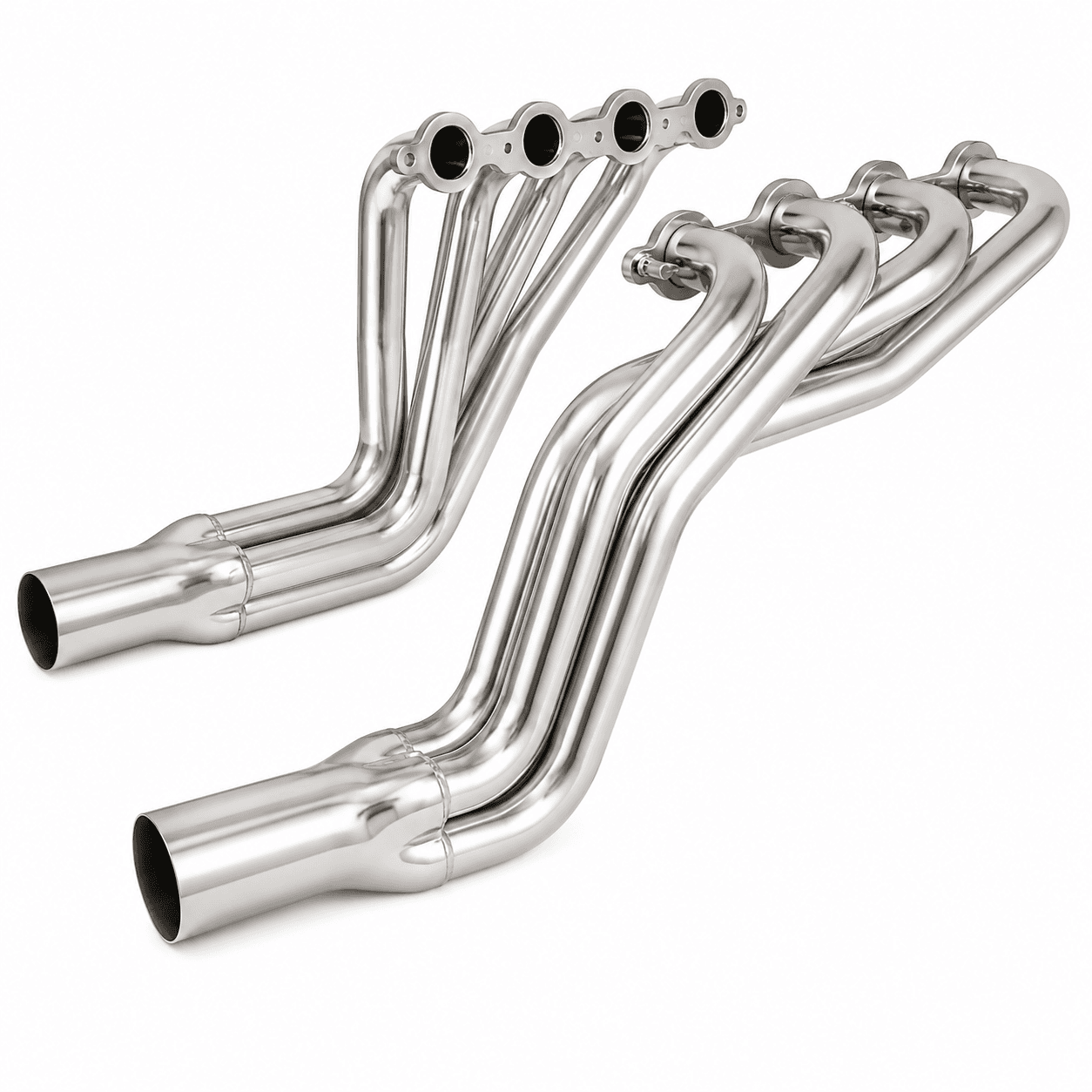
A downpipe connects the turbocharger's exhaust outlet to the rest of the exhaust system. Because its sole purpose is to route exhaust gases away from the turbine, downpipes are only present on turbocharged vehicles. Stock downpipes contain tightly packed catalytic converters that minimize harmful emissions but create a flow restriction, which is why an aftermarket downpipe is one of the most impactful performance modifications available for a turbocharged vehicle. An aftermarket downpipe is designed to reduce backpressure, improve exhaust flow, and improve turbo spool-up times. This guide covers everything you need to know to choose the right downpipe for your build.
The Role of Catalytic Converters
To understand the benefit of aftermarket options, it's important to understand why the factory unit is so restrictive. As a byproduct of combustion, engines produce harmful chemicals including carbon monoxide, nitrogen oxides, and unburned hydrocarbons. The catalytic converter uses a dense internal honeycomb structure coated with precious metals (platinum, palladium, and rhodium) to chemically convert these toxic gases into safer ones including carbon dioxide, water vapor, and nitrogen.
For these chemical reactions to occur, the catalytic converter must reach an operational temperature between 200-300°C. This is why catalytic converters are placed in the downpipe where they will be closer to the turbocharger. This allows them to heat up faster and begin reducing emissions as soon as possible.
Catted vs. Catless Downpipe
Your primary choice when shopping is between a catted or catless configuration. Each comes with meaningful performance and emissions compliance considerations.
-
High-Flow Catted Downpipe: Replaces the restrictive factory catalytic converter with a higher-flow unit. The internal cells are physically larger and less dense, allowing exhaust gases to pass through with less restriction while still converting harmful emissions. High-flow cats are not street-legal in California and other CARB-regulated states unless they carry a CARB Executive Order (EO) number. Always verify your specific downpipe's emissions certification for your state before purchasing.
-
Catless Downpipe: No catalytic converter, just a completely unobstructed pipe. This provides maximum exhaust flow, but significantly increases exhaust smell and is illegal for street use in the U.S. under the Clean Air Act. Catless downpipes should only be considered for dedicated track builds.
The difference in performance between a catless downpipe and a high-flow catted one is surprisingly small in practice. The real performance gains come from increased diameter, smooth bends, and a proper tune. For nearly all street builds, a high-flow catted downpipe delivers almost all the performance with none of the smell, check-engine-light, or legality headaches.
Diameter
One of the most effective ways to improve performance while remaining emissions-compliant is to get a larger diameter downpipe. This reduces backpressure and improves exhaust gas flow. A mild to moderate increase over stock is appropriate for most builds. As a byproduct, larger downpipes also tend to produce a deeper, throatier exhaust tone that many enthusiasts find appealing.
Bigger isn't always better, though. Going too large reduces exhaust gas velocity, which can harm performance and turbo spool up. Match the diameter to your turbo and power level rather than simply choosing the largest available.
When comparing downpipes of equal diameter, prioritize smooth mandrel bends and gradual tapers over sharp angles and abrupt transitions. This helps reduce turbulence and maintain exhaust velocity through the pipe.
Installation Considerations
ECU Tune
An aftermarket downpipe, particularly a catless or high-flow catted unit, meaningfully changes exhaust flow and boost dynamics. The factory tune is calibrated around the stock downpipe's restriction, so removing it without retuning can actually lose power, trigger a check engine light, and cause the vehicle to enter limp mode. A tune is required after installing a new downpipe to safely realize the performance gains and keep the engine running correctly.
O2 Sensor Compatibility
Your factory downpipe contains oxygen sensors that monitor emissions and air-fuel ratios. Aftermarket downpipes may position the O2 sensor bungs at different locations, and the factory sensor wiring may not reach. Many aftermarket kits include O2 sensor extension wires to address this, so verify this before purchasing.
Heat Shielding
Downpipes operate at extremely high temperatures given their proximity to the turbocharger. If your downpipe does not include a heat shield, consider adding one, particularly where routing runs close to heat-sensitive components like wiring or hoses.
Conclusion
A downpipe is one of the most impactful bolt-on modifications available for turbocharged vehicles, delivering meaningful gains in power and spool-up times by reducing backpressure right at the turbocharger's exit. For street-driven builds, a larger diameter high-flow catted downpipe is the best all-around choice, delivering nearly all the performance of a catless unit while remaining emissions-compliant. If you are in California or another CARB-regulated state, verify your specific downpipe's EO certification before purchasing. For dedicated track builds where emissions compliance is not a concern, a catless downpipe provides maximum flow. Whichever configuration you choose, a proper ECU tune is required to run safely and extract the full benefit. You can find all the parts you need and plan your build on RideBuilder.