
Buyer's Guide: Catalytic Converters
5 min read
RideBuilder
Catalytic Converter Buyer's Guide
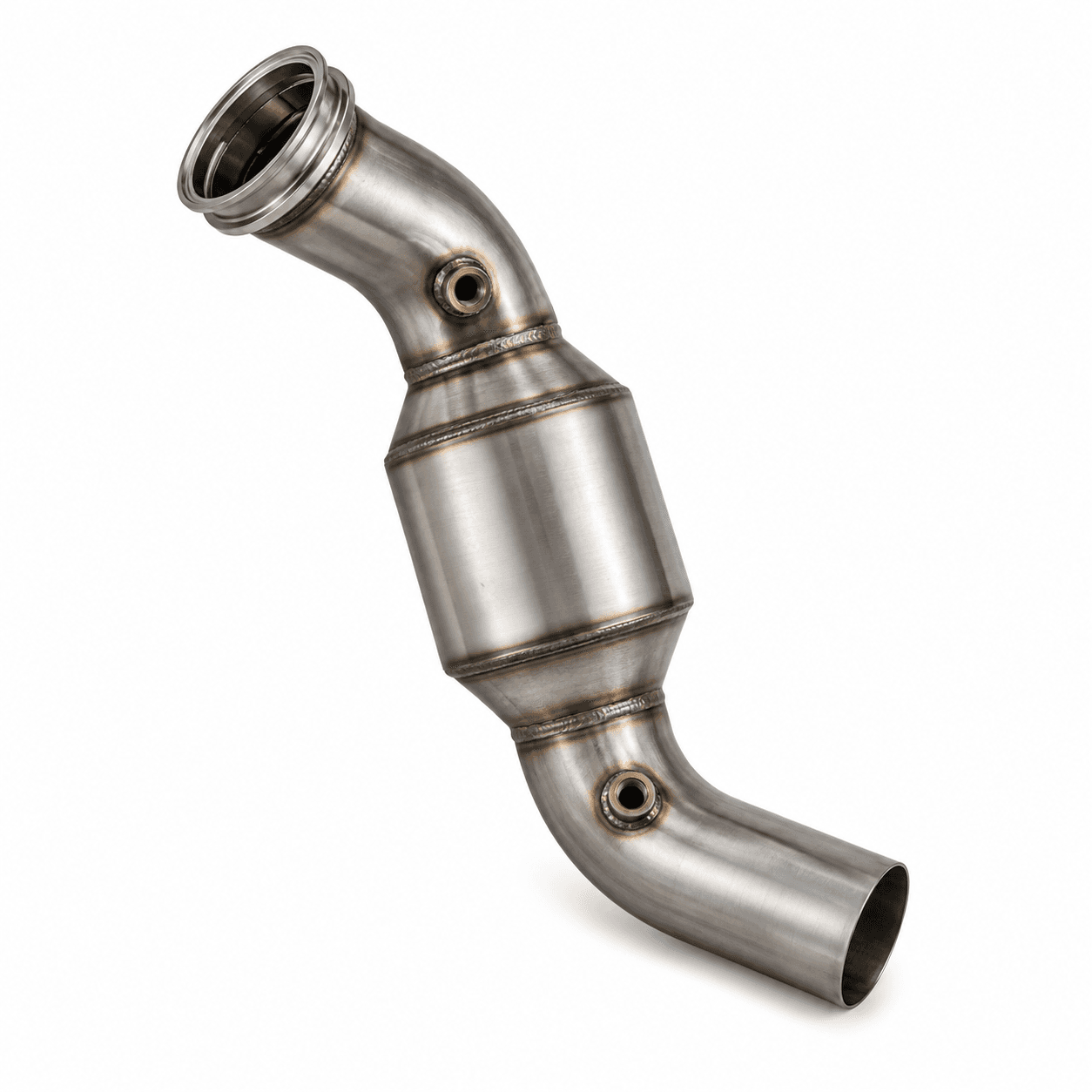
A catalytic converter is a component of your exhaust system designed to reduce harmful emissions. It converts the harmful gases produced by combustion into safer ones before they exit the tailpipe. This guide covers how catalytic converters work, their role in exhaust flow, and what to look for when replacing or upgrading.
How Catalytic Converters Work
Engines produce several harmful gases as byproducts of combustion, including carbon monoxide (toxic), nitrogen oxides (a contributor to smog), and hydrocarbons (unburned fuel). The catalytic converter converts these into safer outputs: carbon dioxide, water vapor, and nitrogen gas. This conversion is made possible by a chemical reaction facilitated by rare metals inside the converter.
Inside the converter is a honeycomb structure consisting of two layers. The substrate, made from ceramic or a metal alloy, defines the honeycomb shape itself. Covering the substrate is the wash coat, which contains the precious metals (platinum, palladium, and rhodium) that catalyze the reactions. The wash coat also dramatically increases the effective surface area of the reaction surface, giving exhaust gases more contact with the catalytic metals as they pass through the catalytic converter.
Catalytic converters must reach 200 to 300°C before they begin working effectively. This is why they are positioned close to the engine or turbocharger, so they heat up quickly and begin reducing emissions as soon as possible after startup.
Role in Exhaust Flow
Because exhaust gases must pass through the small channels, called cells, of the honeycomb structure, catalytic converters create a flow restriction in the exhaust system. Factory converters use high cell density to prioritize emissions-compliance, but this comes at the cost of exhaust flow. Lower cell density reduces restriction and improves flow, which is why performance-oriented converters use larger cells, accepting some reduction in conversion efficiency in exchange for better flow.
Catalytic Converter Types
-
OEM Replacement: A direct replacement for your factory unit. The right choice for most street vehicles where the goal is to restore proper function and remain fully compliant. Typically around 400 to 600 cells per square inch (CPSI).
-
High-Flow Cat: Uses a honeycomb structure with larger cells to reduce backpressure and improve exhaust flow while still converting harmful emissions. A popular upgrade on performance builds. Typically around 100 to 400 CPSI. Note that high-flow cats are not street-legal in California and other CARB-regulated states unless they carry a CARB Executive Order (EO) number. See the Emissions Compliance section below.
-
Catless: No catalytic converter. Provides maximum exhaust flow but is not street-legal in the U.S. under the Clean Air Act. Only appropriate for dedicated track builds.
Emissions Compliance
In the U.S., every street-driven vehicle must have a functioning catalytic converter under the Clean Air Act. California and other CARB-compliant states apply stricter standards. In these states, any replacement converter must carry a CARB Executive Order (EO) number to be legal for street use. High-flow cats without CARB certification do not qualify, regardless of how they perform on an emissions test.
Emissions regulations vary by location. Always check local laws and your specific part's certification before purchasing.
When to Replace a Catalytic Converter
Catalytic converters are durable but do wear out over time. They can also be physically damaged, fouled by an engine issue, or stolen since the precious metals inside make them a target for theft. Common symptoms of a failing converter include:
-
Failed emissions test: A degraded converter can no longer convert gases effectively, causing the vehicle to fail an emissions inspection.
-
Foul exhaust smell: A sulfur or rotten-egg smell from the exhaust is a common sign of poor conversion efficiency.
-
Check engine light: Oxygen sensors upstream and downstream of the converter monitor its efficiency. A failing converter will often trigger a fault code.
-
Reduced engine performance: A clogged converter restricts exhaust flow, reducing power.
Conclusion
The catalytic converter sits at the intersection of emissions compliance and exhaust performance. For most drivers, an OEM replacement is the right call when the factory unit fails. For performance builds, a high-flow cat can meaningfully reduce backpressure while keeping you street-legal, just verify emissions certification for your state before purchasing. Catless setups offer maximum flow but are strictly for track-only vehicles. You can find all the parts you need and plan your build on RideBuilder.
.jpg&w=256&q=75)
.jpg&w=256&q=75)
.jpg&w=256&q=75)
.jpg&w=256&q=75)
.jpg&w=256&q=75)
.jpg&w=256&q=75)
.jpg&w=256&q=75)