
Buyer's Guide: Fuses
6 min read
RideBuilder
Fuse Buyer's Guide
A fuse is a small electrical component designed to protect your vehicle's electrical system. It's job is simple. If electrical current exceeds a safe level, the fuse breaks the circuit before the wiring, connectors, or components can be damaged or start a fire. Once a fuse blows, it must be replaced. Refer to your fuse box cover or owner's manual to identify the exact fuse type and amperage needed. This guide covers how fuses work, the different types you'll encounter, and how to choose the right fuse for your application.
How Fuses Work
Inside every fuse is a thin metal wire that is designed to melt at a specific current level. Under normal conditions, current passes through this metal without issue. If current spikes due to a short circuit, failing component, or circuit overload, the metal melts and breaks the circuit, stopping current flow in a fraction of a second.
Without a fuse, that excess current would cause overheating, potentially melting wiring and components, or starting a fire. The fuse interrupts this before any damage occurs, sacrificing itself to contain the failure to a five-cent part rather than an expensive component.
Fuse Types
Blade Fuses (Standard, Mini, Micro, Maxi)
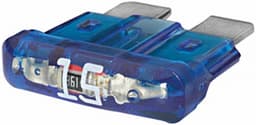
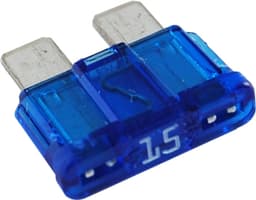
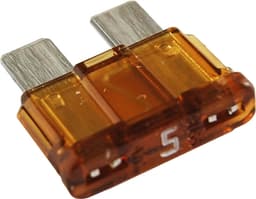
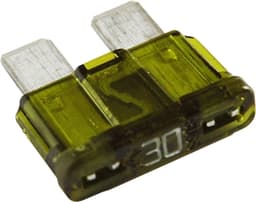
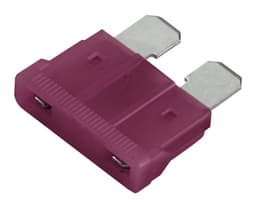
The most common type of automotive fuse, identifiable by their plastic housing with two metal prongs. Blade fuses are color-coded by amperage rating, making the correct replacement easy to identify at a glance. They come in several sizes:
-
Standard (ATO/ATC): Most common size on vehicles from the 1970s-1990s. Measures approximately 19mm wide. Commonly rated from 0.5 to 40 amps.
-
Mini (ATM/APM): The most common fuse type on vehicles produced after the 1990s. Approximately 11mm wide, commonly rated from 2 to 30 amps. A Low Profile Mini version (APS/ATT) is also available.
-
Micro2 (APT, ATR): Even smaller, approximately 9mm wide. Rated from 5 to 30 amps.
-
Micro3 (ATL): Measures 14mm wide and have 3 legs, allowing them to protect 2 separate circuits with one fuse. Rated from 5 to 15 amps.
-
Maxi (APX): A larger version for high-current circuits such as cooling fans, alternators, etc. Measures approximately 29mm wide.

Other Fuse Types
-
J-Case Fuse: A cartridge fuse used for mid-to-high current circuits. Also available in a Low Profile J-Case version.
-
PAL Fuse: Designed to protect high-current electrical circuits. Male and female terminal versions available.
-
Glass Tube Fuse: Composed of a glass body with metal end caps. Inside the glass tube is a thin metal filament that acts as a fuse. Common on vehicles before the 1980s and some aftermarket setups.
-
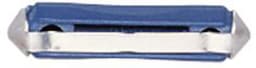
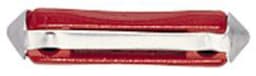
Bosch Fuse: A ceramic barrel fuse commonly found on european cars.
-
Lucas Fuse: Another type of ceramic barrel fuse used in some british vehicles.
High Current Fuses
Circuits that draw large currents require dedicated high-current fuses. These circuits include starters, alternators, batteries, aftermarket sound systems, etc.
| Type | Style | Typical Rating |
|---|---|---|
| MAXI | Large plug-in blade | 20 to 120 amps |
| MIDI/AMI | Bolt-down | 30 to 200 amps |
| ANL | Bolt-down | 35 to 750 amps |
| MEGA/AMG | Bolt-down | 60 to 500 amps |
Amperage Rating
A fuse's amperage rating is the maximum current it can carry before blowing. Always replace a blown fuse with one of the same amperage rating. Choosing the correct rating is critical.
-
Too low: The fuse will blow under normal operation, even when the circuit is working correctly.
-
Too high: The fuse won't blow when it needs to, leaving the system unprotected and defeating the purpose of the fuse entirely.
The correct rating is determined by the wire gauge in the circuit, not the component's draw alone. If a fuse blows repeatedly, there is likely a short or failing component. Never install a high-rated fuse to stop a repeatedly blown fuse. Instead, get your electrical system diagnosed by a professional.
Diagnosing and Replacing Fuses
A blown fuse is one of the most common and easiest electrical issues to address. To check and replace a fuse:
-
Disconnect the battery before working on the electrical system.
-
Locate the fuse box. Modern vehicles often have more than one, typically one in the engine bay and one in the interior. Your owner's manual will show the exact locations.
-
Inspect or test the fuse. A blown fuse usually shows a visibly broken element inside. The gold standard will be to use a multimeter to check continuity. Some fuses have test points on top, letting you check them without removal.
-
Replace with an identical fuse. Many fuse boxes include a built-in fuse puller and spare fuses for easy roadside service.
Startmycar.com is an excellent resource that can help you identify what fuse is required and what component each fuse protects in your specific vehicle.
Adding Circuits and Aftermarket Wiring
When adding an aftermarket component such as a fuel pump, lights, or audio system, you will need to safely wire the system. This requires selecting an appropriate fuse and wire gauge.
Conclusion
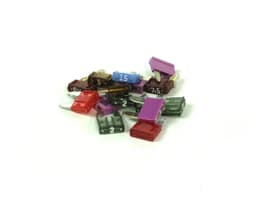
Fuses play a critical role in protecting your vehicle's electrical system. Always replace a blown fuse with a fuse of the same type and amperage rating. When adding aftermarket components, give each new circuit its own properly sized fuse. Keeping a selection of spare fuses in your vehicle is cheap insurance, as a blown fuse is one of the easiest roadside fixes there is. You can find all the parts you need and plan your build on RideBuilder.