

Buyer's Guide: Pistons
8 min read
RideBuilder
Piston Buyer's Guide
Pistons move up and down inside the engine cylinder, transferring the power from combustion to your crankshaft. They must endure the extreme temperatures and pressures of the combustion chamber, repeated thousands of times per minute. For builds adding significant power, upgrading to stronger aftermarket pistons is essential to prevent catastrophic engine failure. Understanding piston materials, dimensions, and design options will help you choose the right ones for your build. This guide walks you through all the essentials so you can get straight to building.
Support us using our affiliate links below. RideBuilder may earn a commission when you purchase products from participating retailers linked on this page, at no additional cost to you. Learn more here.
- GM Genuine Parts 19178305 LS2 and LQ9 6.0L Hypereutectic Aluminum Piston
- JE Pistons GM LS7 Flat Top Piston Set of 8 Bore 4.13 Rod Length 6.125 311907
How Pistons Work

The piston is part of the rotating assembly that converts the energy from combustion into rotational energy. During the combustion stroke, the air-fuel mixture ignites above the piston, and the resulting pressure drives the piston down the cylinder. This linear motion is transferred through the connecting rod to the crankshaft, where it becomes the rotational energy that ultimately turns the wheels.

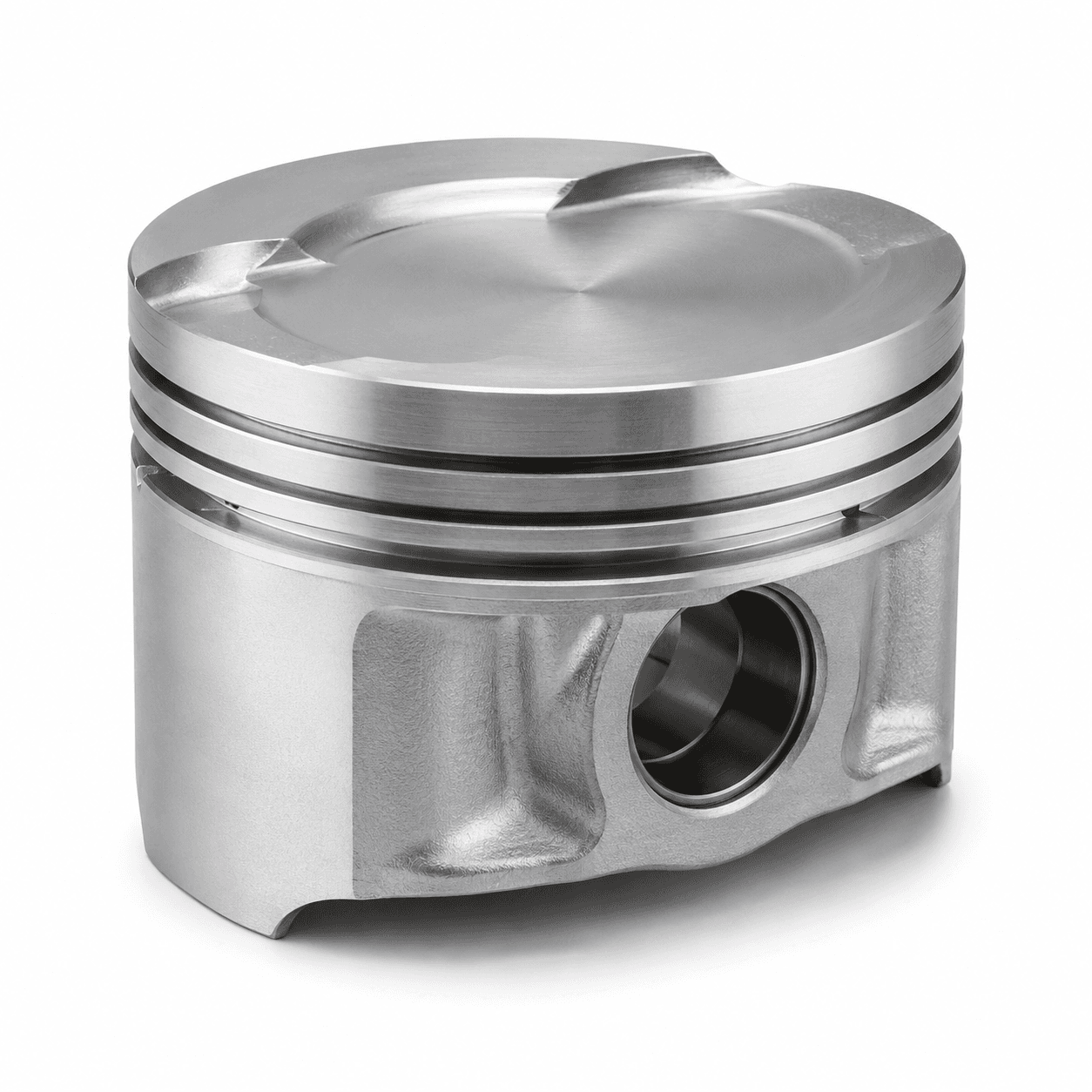
A piston is made up of several key features:
-
Crown: The top surface of the piston that gets exposed directly to combustion. The crown shape affects compression ratio and combustion efficiency.
-
Ring grooves: The channels that hold the piston rings which seal the combustion chamber and control oil.
-
Skirt: The lower section of the piston that acts as a guide to keep the piston moving straight up and down.
-
Wrist Pin Bore: The wrist pin lives within the wrist pin bore and connects the piston to the connecting rod.
Why Upgrade Your Pistons?
The pistons within a factory engine are designed to operate in the conditions of the stock engine. When you significantly increase power, particularly through forced induction, the forces and temperatures inside the cylinder can exceed what factory pistons were designed to handle. Common reasons to upgrade include:
-
Increased strength: Aftermarket forged pistons can withstand the higher cylinder pressures of boosted builds that would otherwise crack a factory piston.
-
Changing compression ratio: Different piston crown designs raise or lower the engine's compression ratio, an adjustment that may be necessary when chasing peak performance.
-
Higher RPM capability: Lighter pistons reduce the reciprocating mass in the engine, allowing for higher RPM limits.
-
Replacing damaged pistons: Pistons damaged by detonation provide a natural opportunity to upgrade.
Piston Materials
The piston material and manufacturing process determines its mechanical properties and therefore the power it can reliably support. The most common piston materials are cast, hypereutectic, billet, and forged.
Cast Pistons: Cast pistons are manufactured by pouring a molten metal alloy into a mold and letting it cool. The main benefit of cast pistons is their affordability. While cast pistons might be appropriate for stock power levels, they may not have the strength to survive increased engine power. This is where hypereutectic, billet, and forged pistons become relevant.
Hypereutectic Pistons: Hypereutectic pistons are cast pistons with a higher silicon content. They are popular in performance street builds because they offer better strength and durability compared to standard cast pistons, at a modest cost increase. Hypereutectic pistons are more brittle compared to alternatives, making billet or forged pistons better choices in high boost applications.
Billet Pistons: Billet pistons are manufactured by machining away a solid puck of aluminum using a high-precision CNC machine. This is called subtractive manufacturing. Billet pistons offer better strength compared to cast or hypereutectic pistons, making them great options for performance builds.
Forged Pistons: Forged pistons are made by pressing a solid chunk of billet aluminum under extreme pressure to form the piston shape. The shape is then further refined using a CNC machine. This manufacturing process creates a highly uniform metal grain structure, which is exceptionally strong. Forged pistons offer superior strength and durability, making them the piston material of choice for high boost or high performance applications. The tradeoff is high cost and more thermal expansion when exposed to heat. This means more clearance is needed between the piston and cylinder wall to account for this expansion, causing piston slap when the engine is cold.
Compression Ratio and Crown Design
The shape of the piston crown directly affects the engine's compression ratio and valve clearance. Common crown styles include:
-
Dished pistons: The crown is recessed which increases combustion chamber size, lowering compression ratio. Common on forced induction builds where the lower compression leaves room for boost and reduces detonation risk.
-
Flat-top pistons: No effect on combustion chamber size or compression ratio. Common on naturally aspirated builds.
-
Domed pistons: The crown protrudes upward which decreases combustion chamber size, increasing compression ratio. Used on high-compression naturally aspirated builds chasing maximum power.
Piston head volume describes the volume measured in cubic centimeters within the piston crown. Typically, positive volumes correspond to dished pistons and negative volumes correspond to domed pistons, although this is unfortunately not standardized.
Valve Reliefs
Valve reliefs are cutouts in the piston crown that can be present to provide extra clearance for the valves. This helps prevent your valves from running into your piston and causing catastrophic damage. This is especially important in performance engines with larger cams. Due to the asymmetry of pistons with valve reliefs, make sure to install the piston in the correct orientation.
Piston Rings
Piston rings are metal rings fitted into the grooves of the piston that help create the seal of the combustion chamber and manage oil. Most pistons use three rings:
-
Top compression ring: Seals the bulk of the combustion pressure.
-
Second compression ring: Provides additional sealing and helps manage oil.
-
Oil control ring: Scrapes excess oil from the cylinder wall, controlling oil consumption.
Your piston will indicate the maximum piston ring thickness. Read more about piston rings here.
Sizing and Fitment
Pistons must be matched precisely to your engine. You should also coordinate your piston selection with your connecting rods and any engine block machining.
-
Bore: Pistons are sized to your engine's cylinder bore. If your block has been bored oversize during machining, you will need correspondingly oversized pistons.
-
Piston-to-wall clearance: The intentional gap left between the piston skirt and the cylinder wall. This prevents the piston from seizing as it expands with heat, while keeping it tight enough to avoid piston slap or poor sealing. Proper piston-to-wall clearance is most affected by piston material, although it's also impacted by piston size, design, and operating conditions.
-
Compression Height: The distance from the center of the wrist pin to the top of the piston. This affects how your piston sits in the cylinder and its compression ratio.
-
Rod Length: Indicates the length of connecting rod required for that piston.
Conclusion
Pistons are a foundational component of any high-performance engine build. For stock and mild applications, cast or hypereutectic pistons are perfectly adequate. For forced induction or other high performance applications, consider billet or forged pistons. Next, match your crown design to your target compression ratio and aspiration type. Always coordinate piston selection with the rest of your rotating assembly to ensure proper fitment. You can find all the parts you need and plan your build on RideBuilder.