Air Filter Buyer's Guide
Your vehicle's air filter has a meaningful impact on how well your engine breathes. Your choice affects airflow, vehicle sound, and maintenance requirements. This guide covers everything you need to know to choose the right air filter for your vehicle and application.
Why Replace your Air Filter
-
Performance: A clogged or overly restrictive air filter limits the volume of air your engine can draw in, reducing power. Upgrading to a less restrictive aftermarket filter allows more air to reach the engine, supporting higher horsepower.
-
Maintenance: Air filters trap dust, debris, and contaminants over time. A filter that is too dirty to function properly reduces airflow and can allow harmful particles to reach the engine. While paper filters require periodic replacement, most aftermarket filters are reusable and just require cleaning.
Filter Types
Drop-In Panel Filter
A drop-in filter replaces the factory paper filter inside your existing airbox without modifying anything else. Installation is straightforward and fitment depends on your exact year, make, model, and trim. These are a good choice for daily drivers who want modest performance improvements and reduced maintenance costs without changing their intake system.
Cone Filter
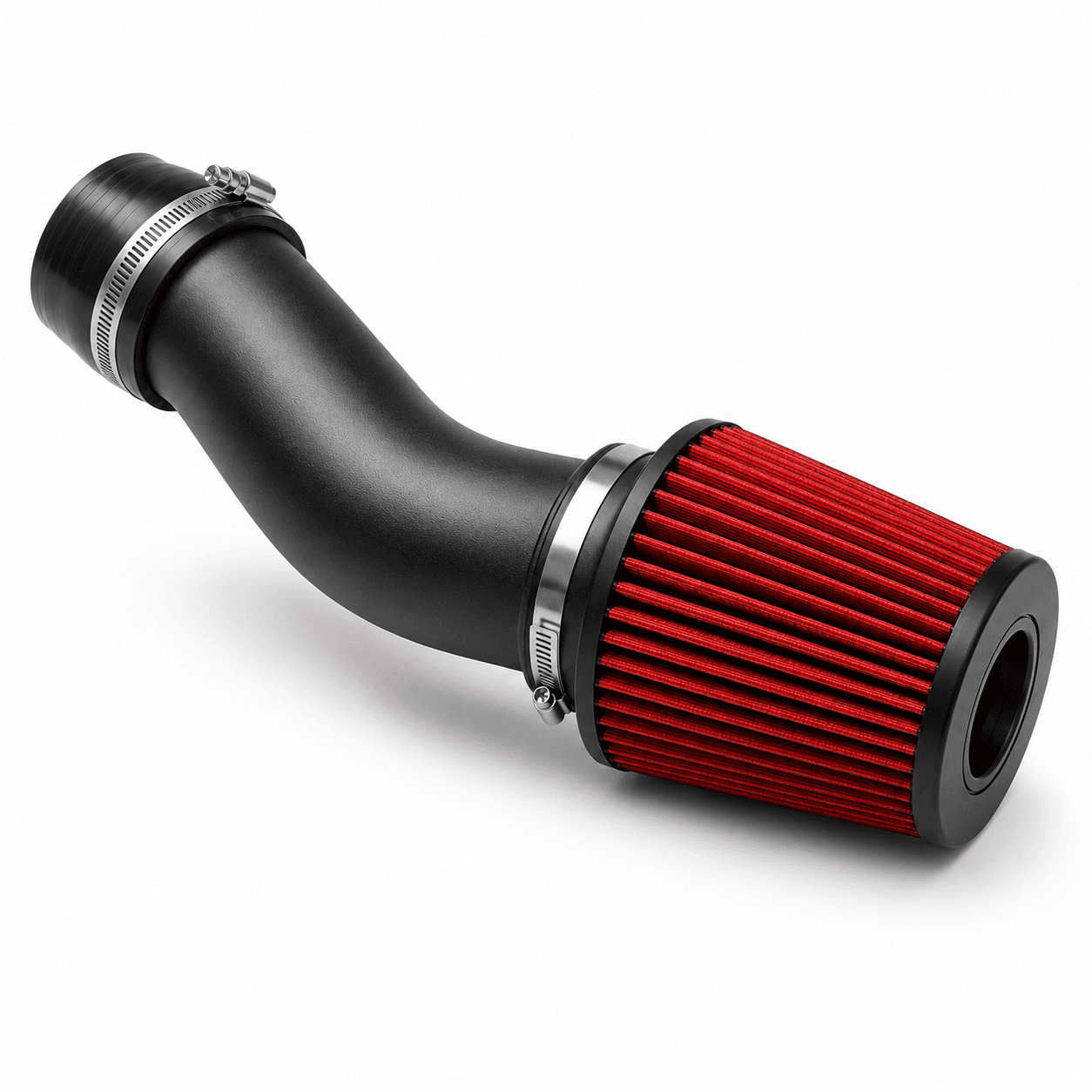
Cone filters mount directly to the intake piping, replacing the factory airbox entirely. They are secured using a worm-gear or T-bolt clamp and are sized by inlet diameter. Cone filters offer greater surface area and therefore less restriction compared to stock air filters. As a byproduct of increased airflow, cone filters also produce a more audible induction sound under acceleration, a characteristic many enthusiasts enjoy. Cone filters are the standard choice for performance applications.
Filter Materials
-
Paper/Cellulose: The OEM standard. Dense fibers provide fine filtration, but create more airflow restriction than aftermarket alternatives. Paper filters are inexpensive but must be replaced rather than cleaned.
-
Cotton: The most popular aftermarket choice. Cotton filters are oiled to help capture dirt and debris, and offer excellent airflow with strong filtration. Reusable after cleaning, which reduces long-term maintenance costs. Just make sure to re-oil your filter after cleaning.
-
Synthetic: Another popular choice in the aftermarket. Provides a good balance of airflow and filtration efficiency. Does not require oiling, which simplifies maintenance.
-
Foam: Good airflow and excellent ability to trap large amounts of dirt, making foam filters a great choice for off-road or dusty environments. Requires cleaning and re-oiling.
Dry vs. Oiled Filter
Dry filters rely on the filter material itself to capture particles. Oiled filters add an oil coating to the material, which helps trap finer particles and supports greater airflow by allowing the filter media to be more open.
Dry filters like paper or synthetic are simple and low maintenance. Oiled filters like cotton or foam require proper oiling after each cleaning. Avoid using too much oil because this can contaminate the mass airflow (MAF) sensor, which affects how the engine measures incoming air and how your engine runs. Read more about MAF sensors here.
Sizing and Fitment
Drop-In Panel Filters
Drop-in filters are vehicle-specific and sit within the factory airbox. Confirm compatibility with your specific year, make, model, and trim.
Cone Filters
If your cone filter is not sold as a vehicle-specific fitment, verify the following dimensions before purchasing:
-
Inlet (flange) inside diameter: Must match your intake piping diameter exactly. Most important specification.
-
Base outside diameter: The widest point of the filter. Ensure adequate clearance in your engine bay or intake box.
-
Top outside diameter: The diameter of the narrow end of the cone.
-
Height: Total filter length. Ensure adequate clearance in your engine bay or intake box.
Larger filters offer more surface area, which reduces restriction and extends the interval between cleanings. When space allows, a larger filter is generally preferable.
Conclusion
Choosing the right filter comes down to your application and desired maintenance. For most street builds, a cotton oiled or synthetic filter is the right upgrade over the factory paper unit. An aftermarket air filter will provide better airflow, more power, and reduced long-term maintenance costs. For off-road or dusty environments, foam is the clear choice due to its superior ability to trap dirt. You can find all the parts you need and plan your build on RideBuilder.
Additional Resources