Brake Rotor Buyer's Guide
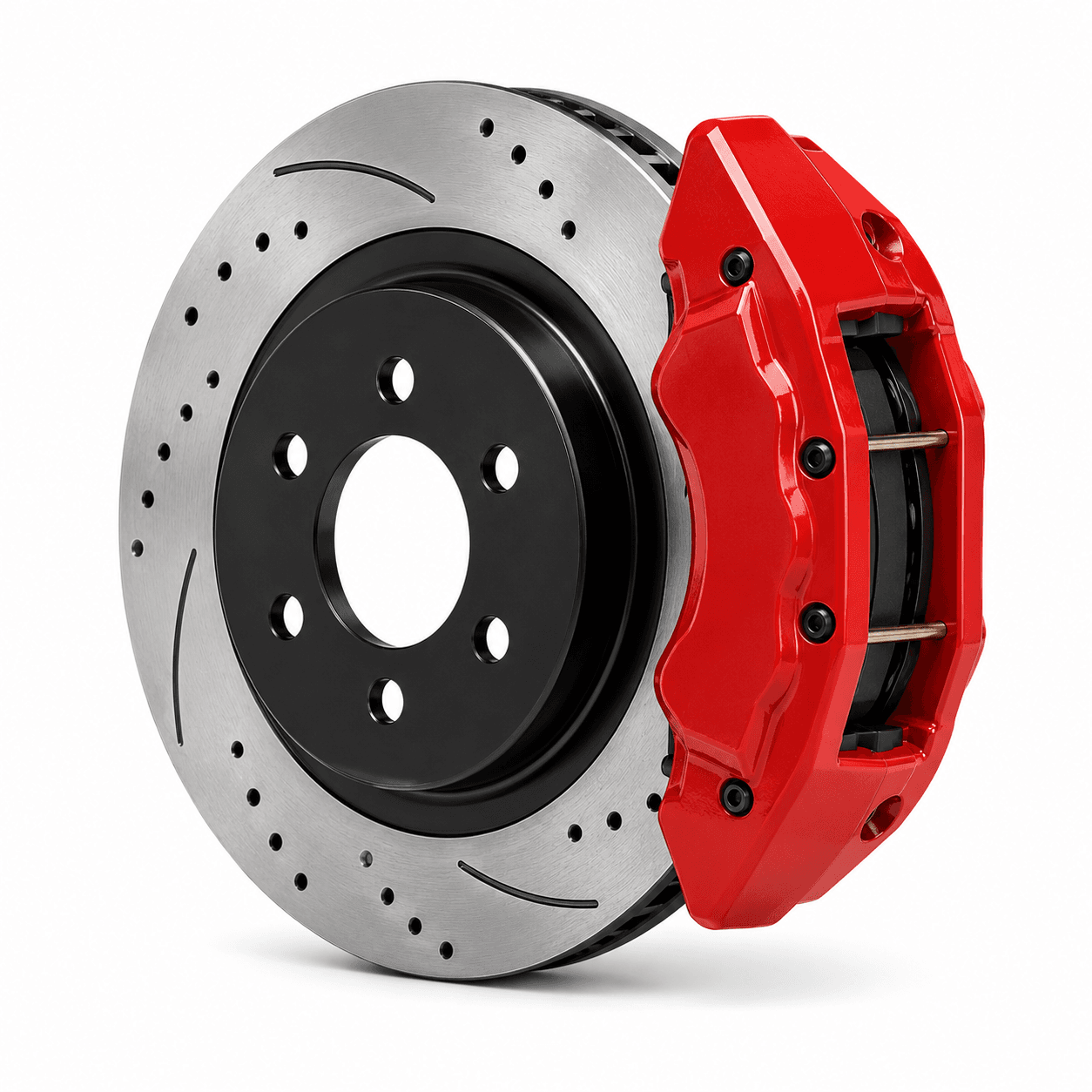
In a disc brake system, the caliper clamps the brake pads against the rotor to slow the vehicle. The rotor does more than provide a surface for the pads to grip; it absorbs and dissipates the enormous amount of heat generated every time you brake. For most street applications, stock rotors handle this job without issue. In performance applications where the brakes are being used more heavily, enthusiasts will typically upgrade to a big brake kit with larger rotors to maintain consistent, fade-free braking. This guide covers the key rotor specifications, design options, and what to verify before purchasing.
What is Brake Fade and Why Does It Matter?
During heavy use, brakes are prone to a concept known as brake fade. Brake fade occurs when the braking system generates more heat than it can dissipate. As rotor and pad temperatures climb beyond their operating limits, friction output drops and with it, braking performance. The result is a pedal that feels normal but produces less stopping force than expected, which is both dangerous and unpredictable.
Street drivers rarely encounter brake fade under normal conditions. Enthusiasts running track days, however, often will notice it within the first few laps on stock brakes. There are two primary levers to combat brake fade to achieve consistent braking response lap after lap. The first lever is to increase the mass of the rotor, allowing it to act as a better heat sink. The second is to improve the cooling of your brake rotors so heat is dissipated faster. Rotor diameter, design, and construction all serve one or both of these goals.
Rotor Diameter
Larger diameter brake rotors have more thermal mass, which is a fancy way of saying they are capable of absorbing more heat before experiencing brake fade compared to smaller rotors. Larger rotors also provide more leverage during braking, also known as brake torque. Think of it like a door; pushing at the edge takes far less effort than pushing near the hinge. Larger brake rotors work the same way. A larger rotor applies braking force farther from the center, making it easier to stop the wheel.
When it comes to brake rotor diameter, bigger is almost always better for performance as long as you can fit it within your rim. Big brake kits will pair a larger rotor with a matching caliper to optimize performance.
Rotor Style

Solid (Blank)
Solid rotors provide a smooth rotor surface and are standard on most passenger vehicles. They are durable, inexpensive, and appropriate for daily driving.
Slotted
Slots machined into the rotor face help clean the brake pad and evacuate gas, improving braking consistency. The trade-off is slightly accelerated brake pad wear because the slots are constantly "shaving" the pad. Slotted rotors are the preferred choice for track use and spirited street driving.
Drilled Rotor
Drilled rotors also help to evacuate gas and provide a modest cooling benefit. Their primary appeal, however, is aesthetic. Drilled rotors have an aggressive look that is popular on sports cars. The problem with drilled rotors is that they are more prone to cracking due to these holes, especially in performance applications where they will undergo repeated thermal cycling. They also reduce the mass available to act as a heat sink. For these reasons, drilled rotors are generally avoided for performance applications but their aesthetics cannot be overlooked.
Drilled and Slotted
These combine the benefits and drawbacks of slotted rotors and drilled rotors. The same cracking risk applies as with drilled-only rotors, making these a better choice for aesthetics than for serious performance use.
Ventilation
Ventilated rotors have internal vanes between the two friction surfaces. This dramatically improves heat dissipation by allowing air to flow through the rotor as it spins, acting like a fan. Ventilated rotors are standard on the front wheels of most modern vehicles where braking loads and heat generation are highest. For any performance application, ventilated rotors are strongly recommended over solid rotors of the same size.
One-Piece vs. Two-Piece Rotors
One-piece rotors are the standard design. Two-piece rotors separate the mounting section from the outer ring, allow each to be made from a different material and the outer ring to be replaced separately. Two-piece rotors benefit from weight reduction because the mounting section will be made from aluminum rather than steel. The primary downside of two-piece rotors is their increased price compared to one-piece units.
Rotor Material
Most brake rotors are cast iron, which offers a good balance of thermal capacity, durability, and cost. High-end performance and motorsport applications use carbon-ceramic rotors, which offer dramatic weight savings at a significant price premium.
How to Confirm Compatibility
Brake rotors and calipers must fit within the confined space inside your wheel. Two clearance checks are required before purchasing:
-
Inner Diameter Clearance: The rotor and caliper assembly must clear the inner barrel of the wheel. Most aftermarket brake manufacturers publish minimum wheel diameters for a given big brake kit.
-
Spoke Clearance: The caliper must also not contact the wheel spokes. A minimum of 3mm clearance is recommended. Manufacturers publish caliper templates that you can print and physically hold inside your wheel to check this. If your brake kit contacts your spokes, you can use a wheel spacer to correct this. Read more here.
-
Hub Pattern: Confirm the rotor's bolt pattern matches your vehicle's hub.
Bedding In Your New Rotors
After you install your new brake rotors or brake pads, it is important to bed your rotors. This ensures that an even layer of brake pad material gets transferred to the brake rotor, improving braking and preventing warping.
To bed your brakes, follow the steps below on a quiet road or empty parking lot:
-
Perform 10 moderate stops from 35 mph to 5 mph. Allow 30-60 seconds between each stop for the brakes to cool slightly.
-
Perform 3 stops from 50 mph to 5 mph. Avoid locking up your brakes.
-
After completing the sequence, drive at low speed for several minutes to allow the rotors to cool.
-
Avoid using the parking brake until the rotors have fully cooled to prevent rotor warping.
Conclusion
Choosing the right brake rotors comes down to matching the design to your driving needs. For daily driving, stock-style solid rotors offer the best durability and value. For spirited street driving, slotted rotors provide better fade resistance without sacrificing reliability. And for serious track use, consider a big brake kit with larger diameter rotors for maximum thermal capacity and leverage. Remember that rotors are just one part of the system. It is best to pair them with quality pads and high-grade brake fluid for best results. You can find all the parts you need and plan your build on RideBuilder.
Additional Resources